





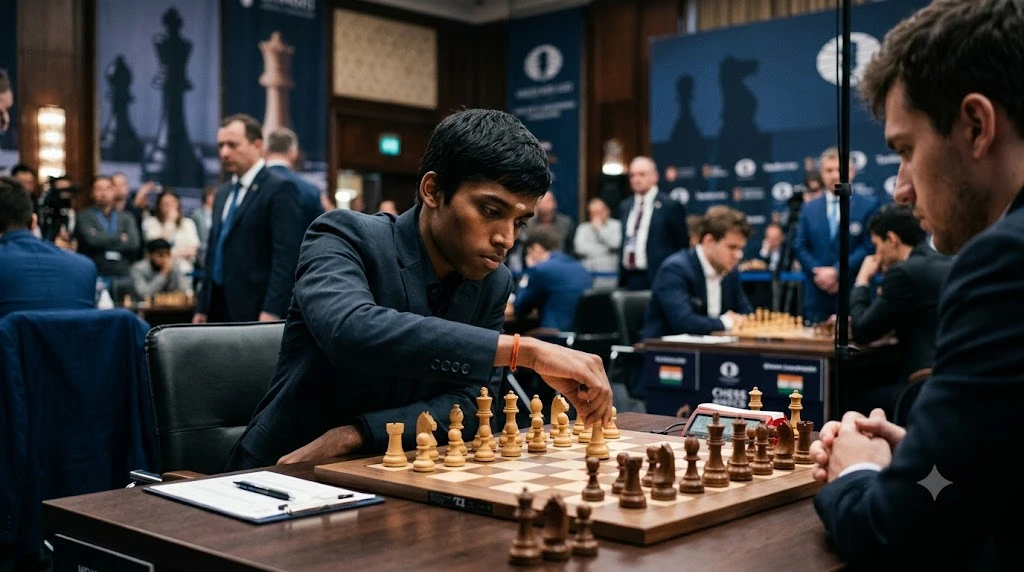
Every Indian chess fan quotes ratings, but few know how a single result moves them, or why a win over a stronger player is worth so much more
Chess ratings are the only numbers in sport that fans routinely argue about in public. Gukesh’s rise, a teenager’s jump past 2750, a veteran’s slow slide: all of it is told through a four-digit figure. Behind that figure sits a formula more than half a century old, and understanding it explains most of what Indian chess has been through in recent years.

Arpad Elo
A Physicist Walks Into Chess
The method takes its name from Arpad Elo, a physics professor and strong amateur player who emigrated from Hungary to the United States. He worked it out in the late 1950s, and FIDE, the game’s world governing body, took it up as its official rating method in 1970. Until then, committees and tournament organisers handed out ratings by judgment, which made comparing players from different countries largely guesswork. Elo’s insight was to let results alone set the number, so that it updates without anyone having to decide.
The Whole Idea in One Sentence
If you know the gap between two players’ ratings, you can predict the score you expect them to share, and the result should nudge both ratings toward reality. A win against a favourite earns a lot because it was unlikely. A win against a weaker opponent earns little because it was expected.
Doing the Sums
The yardstick is the 400-point gap. At that difference, the stronger player is expected to score about 91 percent, meaning roughly ten wins for every loss over a long run. At a gap of 100 points, the favourite is expected to score about 64 percent.
After a game, the change is simple: a number called the K-factor, multiplied by the gap between the actual result and the expected one. Take a player rated 2600 who beats a 2700 opponent. The lower-rated player was expected to score 0.36, but scored 1, a surprise of 0.64. With a K-factor of 10, that is a gain of 6.4 points, and the loser drops by the same amount. A single win moves things by a handful of points, but a long run of upsets can shift a career.
The K-Factor, or How Fast Numbers Move
K is not the same for everyone. The federation uses a larger value for new players and young juniors, whose true strength is still unclear, so their ratings swing quickly. It uses a mid value for most established players and a small one, 10, for players who have reached 2400, so that elite ratings change slowly. The design keeps top-level ratings stable and lets newcomers find their level fast.
Why Young Players Are Hard to Rate
There is a known wrinkle. A teenager improving every month is usually stronger than their rating says, because the number only reflects past results. When that player beats established opponents, points flow from the established players to the junior. Many observers believe this produces a mild deflation in the ratings of older players, and it is one reason a surge of young talent reshuffles the rankings faster than people expect.
The India Connection
Ratings matter in India for practical reasons. To earn the grandmaster title, a player needs three qualifying results, called norms, and a rating of at least 2500. India now has well over 80 grandmasters, a number that would have seemed fantastic a generation ago. In December 2024, D Gukesh became the youngest undisputed world champion at 18, winning the title match in Singapore. The rating list is what gave the next wave of Indian juniors a visible ladder to climb, since a player can watch the number rise tournament by tournament.
What the Number Cannot Say
For all its elegance, a rating is only an estimate. It cannot see a player’s preparation for a specific opponent, form on a given day or comfort with a particular opening. It also depends on enough games being played within a connected pool, which is why players who rarely meet strong opposition can look better than they are. The formula measures results, not understanding, and the players themselves are the first to say the board is a better judge.