




Forty years after Parliament tried to stop legislators from switching sides for profit, the law’s weakest link is still the person who decides who has broken it
India’s anti-defection law was meant to give voters a basic safeguard against a familiar betrayal: backing a candidate because of the party symbol, then watching that candidate change sides once the votes are counted. The principle is easy to state. Applying it has proved far harder, and the standoff over 20 rebel Trinamool Congress MPs awaiting a verdict from the Lok Sabha Speaker illustrates why.
A Law Born From a Chaotic Season
The anti-defection rules entered the Constitution in 1985 as a new Tenth Schedule, written in by the 52nd Amendment. The backdrop was the late 1960s, when elected members in several states kept hopping between parties, and “Aaya Ram, Gaya Ram” became the popular label for the habit. Ministries collapsed or survived according to where a few individuals chose to sit, not according to what voters had endorsed at the ballot box, and the Schedule was meant to end that churn.
Three Ways to Lose a Seat
Disqualification can follow in three situations. A member who walks away from the party that sponsored them, of their own accord, loses the seat. So does a member who defies the party’s instruction on a vote, or sits it out, without clearance, unless the party pardons the lapse within a fortnight. The rules also reach members who were never party nominees: independents who later sign up with a party, and nominated members who do so after their first six months.
The Escape Hatch Called Merger
The Schedule shields a group from penalty when a party’s legislators, by a margin of at least two to one, decide to fold into some other party. Until 2003, a smaller bloc could also qualify by splitting off, but the 91st Amendment removed that option because small groups were using it to engineer exits. The merger route survives, and it is the defence defecting groups reach for first, describing their move as a merger rather than a desertion.
The Referee Has a Party
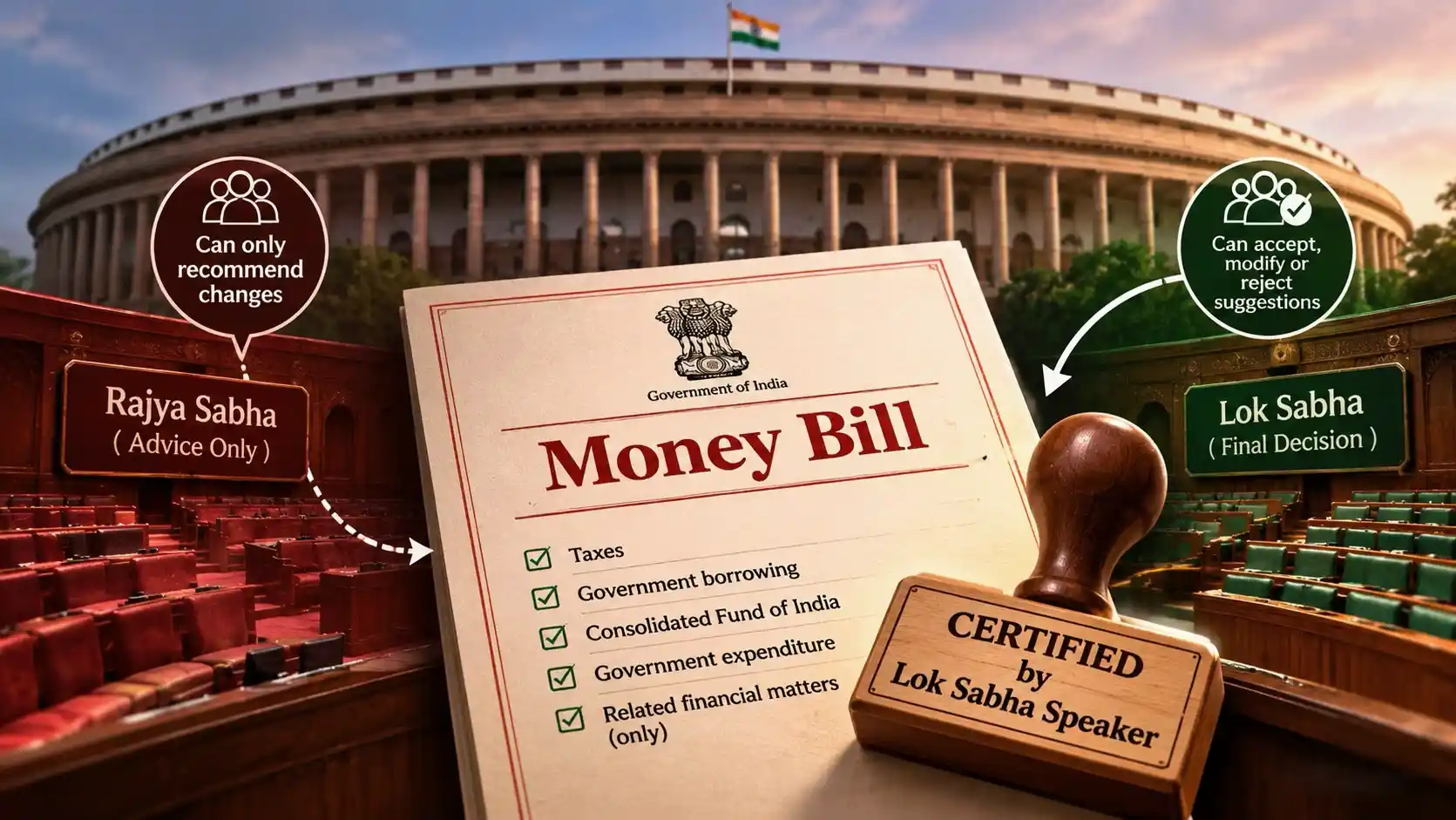
The structural weakness lies in who decides. Under the Schedule, the presiding officer of the House rules on disqualification petitions, which in the Lok Sabha means the Speaker. Speakers are elected from among the members and usually belong to the ruling party or alliance, so the person judging a defection often has a political stake in the result. The law also sets no deadline, which means the practical power to delay sits with the office that has the most reason to be careful, or slow.
What the Courts Have Said
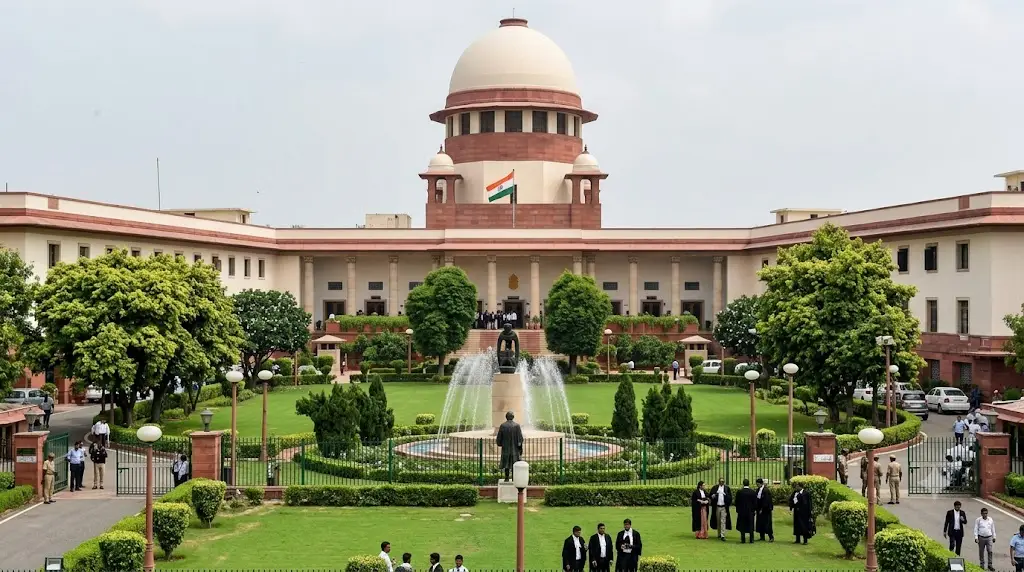
The Supreme Court’s first major word on the subject came in Kihoto Hollohan v. Zachillhu in 1992. It kept the Schedule intact while treating the presiding officer’s ruling as one that a court may examine. A Manipur case decided in 2020 pushed the idea further. The bench invited Parliament to think about handing these disputes to a standing tribunal led by a former judge, and observed that a Speaker should normally settle a petition within about three months.
That guidance does not carry the force of a statute, and courts have generally hesitated to put firm deadlines on a constitutional office.
A Live Test in Delhi
The TMC dispute follows that pattern. The party filed disqualification petitions against 20 of its Lok Sabha MPs in June, after they allegedly aligned with another party. When months passed without a decision, it moved the Supreme Court. According to press accounts, the bench expressed a wish for quick action from the Speaker without fixing a date, and the Speaker’s office gave the MPs until October 8 to file their replies. That date governs the MPs’ responses and is not a ruling deadline for the Speaker, which is why many observers expect the question of timing to stay open for some time.
Fixes on the Table
Reform ideas have circulated for decades. The most common is to move the decision from the Speaker to the President or Governor, acting on the Election Commission’s advice, which would take it out of partisan hands. Another is a fixed statutory timeline, which would convert the court’s expectation of a roughly three-month window into a binding rule. A third is the independent tribunal the Supreme Court floated in 2020. Parliament has taken up none of the three, and whichever party is in power at a given moment tends to be the one that gains from leaving things as they are.
The Lesson
The Tenth Schedule has curbed the open horse-trading of the 1960s, but the TMC dispute shows how a rule without a clock can lose its bite. For voters, the real test is not whether a defection is legal in the abstract, but whether anyone has to answer for it before the next election arrives.