




A payment that takes a few seconds on screen passes through an app, two banks and a national switch, and understanding the chain explains both why UPI feels instant and why it sometimes freezes
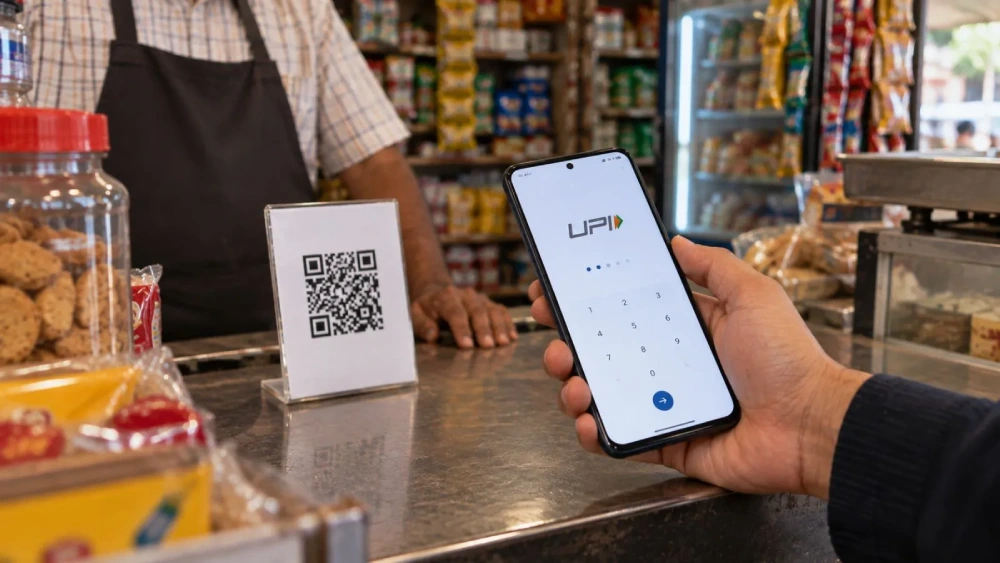
Most Indians have scanned a QR code at a tea stall or sent money to a friend without thinking about what happens next. Behind that one tap is a relay run by five different parties, working in a sequence that has been refined for roughly a decade. Seeing how it fits together helps explain why India now handles billions of such payments every month, and what is going on when a payment hangs.
Unified Payments Interface (UPI)
Money That Never Leaves the Bank
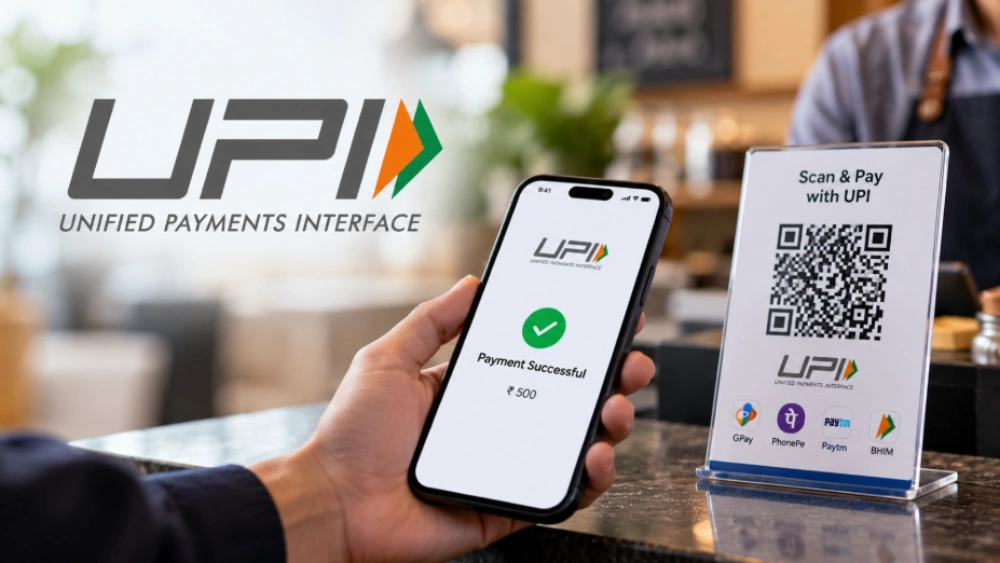
The first thing to understand is that UPI is not a wallet. When you pay, money moves directly from your bank account to the receiver’s bank account. The apps people use to pay are only the front door. The National Payments Corporation of India, set up in 2008, built the system on its earlier IMPS network and opened UPI to the public in 2016, with a small group of banks at the start.
The Address That Replaced the Account Number
Before UPI, sending money meant sharing an account number and IFSC code, which is slow and easy to get wrong. UPI replaced both with a virtual payment address, a short handle like name@bank. The handle is only a pointer. The real account details stay with the bank, so the person being paid never sees them, which is why sharing a UPI ID feels safer than sharing a bank account number.
Following One Payment, Step by Step
Suppose you pay a shopkeeper Rs 200. Your app first sends a payment request to its partner bank, which passes it to the central switch run by NPCI. The switch looks up the shopkeeper’s address, finds the linked bank and checks that it is valid. It then asks your bank to debit your account. Your bank asks you for your UPI PIN, confirms it is correct, takes the money and tells the switch. The switch instructs the shopkeeper’s bank to credit the amount, and confirmations flow back to both apps. The five parties are your app, your bank, the NPCI switch, the shopkeeper’s bank and the shopkeeper’s app, and the whole loop usually completes within a few seconds.
Why the PIN Never Travels in the Open
The PIN is the key to the system’s security. It is entered through a secure module inside the app, encrypted on the phone and decrypted only by your bank. Nobody in the middle, including the app itself and the switch, can read it. The app is also tied to your registered SIM and device, so even a stolen PIN is of little use on a different phone. That combination of something you know and the phone you hold works as two-factor protection on every payment.
When the Screen Says Pending
Delays happen when one link in the five-party chain is slow to answer. If your bank debits your account but the receiver’s bank does not confirm the credit, the payment sits in a pending state while the system waits. Rules from the central bank require such transactions to be reversed within a short window, and compensate customers if the reversal is late. In practice, most pending payments either complete or reverse within a day, which is why the usual advice is to wait before retrying and risking a double payment.
Who Pays for Free?
For users, UPI costs nothing. For merchants, payments have carried no merchant fee since the government’s zero-cost policy took effect in 2020, which has pushed adoption but left banks and app companies to find other ways to cover their costs. The question of whether and how to charge for UPI has stayed in the news ever since, and the answer will shape how long this free model lasts. A related debate concerns concentration, since a few apps handle most of the volume, and NPCI has proposed a cap on any single app’s share, a deadline that has been extended more than once.
Beyond the Smartphone
UPI has also pushed outward. A lighter version handles small payments with fewer steps, and a phone-call-based option, UPI 123Pay, lets people with basic feature phones pay by voice prompts. The system has been linked to payment networks in several countries, including Singapore, the UAE and Bhutan, so travellers can use it abroad. Monthly transactions crossed 20 billion in 2025, a figure that would have sounded implausible when the system launched.
The Next Test
The more UPI grows, the more it depends on every link in the chain staying fast and reliable. Outages and slow responses draw complaints because millions now use the system for rent, groceries and salaries. The next phase will be less about adding users and more about keeping the whole relay steady under heavier load.