



Introduction
We no longer just share moments.
We store them.
Do you remember when remembering meant flipping through old photos or opening a journal?
Perhaps it meant recalling a conversation?
Now, remembering can be as simple as scrolling through a device.
A five-year-old photo appears in your gallery.
An old Instagram story brings back a memory of a specific day.Sometimes, a random meme can transport you back to a whole period of your life.
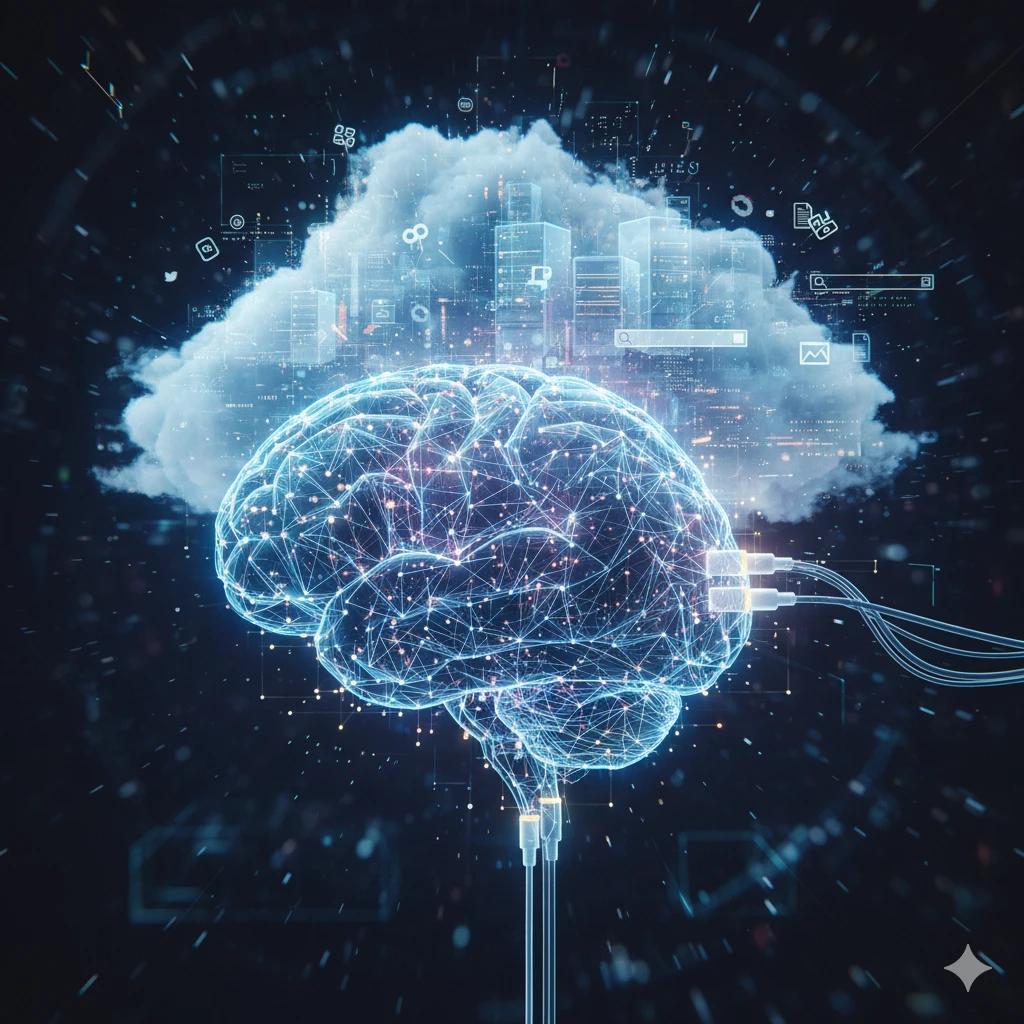
The internet has quietly become our second memory.
Unlike human memory, the internet doesn’t forget.
It holds on to everything.
The internet and our memory have an interesting relationship.
Human memory is unreliable.
We forget conversations, dates, faces, and sometimes even reasons why something was significant to us.
But the internet is different.
It is like an open book. A photo can remain untouched for years. A message can sit unread long after the sender has moved on. A social media account can stay active, storing an older version of ourselves that we no longer recognize.
What does this mean?
We are growing older while the younger versions of ourselves remain perfectly preserved.
The person we were at fifteen, sixteen, or seventeen is still online, while we move forward in life.
It’s as if we have an archive of every version of ourselves.
One peculiar thing about digital memories is that they often surprise us.
You might be having a normal afternoon when your phone suddenly shows you an old photo.
For a moment, your current reality fades away.
You remember the people who were with you, the place, maybe even what you were worrying about that day.
You might recall someone who is no longer part of your life.
The photo itself may not be special, but the memory attached to it is.
Traditional photos have done the same, but now we can store thousands of such memories in a small device.
We can look back on lives we lived before we were even born.
There is a strange downside to this.
Some memories we would prefer to forget.
An embarrassing post, an old opinion, a poorly worded caption, or a photo from a phase of life we have moved on from.
This is a new challenge for growing up in the digital age.
While humans naturally forget, the existence of an eternal memory can be problematic.
In the real world, people meet us in the present, but online they can see us in the past.
This means the internet sometimes denies us what humans naturally offer— the chance to change.
We Are Basically Creating Digital Time Capsules
Interestingly, many people now create content they know they may revisit in the future.
A private account.
A photo dump. A collection of random screenshots. A note filled with thoughts. A video recorded on an ordinary day.
None of these things seem important at the time, but one day they could become tiny time capsules, revealing who we used to be.
And the truth is, the best things we create in the present may not be the ones we plan to be remembered.
Sometimes it’s the blurry picture taken on a whim, the badly edited video, the random voice note, or the screenshot of a funny conversation.
All of these things together form the perfect picture, arguably better than the carefully curated version we show the world.
From social media to personal history
It’s interesting how the purpose of social media has changed.
We often think of it as a place where people share their lives with the world.
However, increasingly, people are curating content for themselves rather than others. The audience may still be strangers, but sometimes the future audience for our content may just be ourselves.
In the years ahead, we might scroll through our old posts and come across not only pictures of what we used to look like, but also what we used to believe in, what made us laugh, who was important to us, and the kind of people we used to be.
In short, social media is becoming a kind of personal history. But should everything be remembered?
Maybe not.
For as long as humans have been around, we have relied on forgetting.
It helps us move on, and it lets us let go of past embarrassments. But the internet changes that.
It gives us a near-superhuman ability to remember, but does remembering always mean something?
A thousand photos can’t really tell us how we felt.
A saved conversation can’t bring back the person we used to be. A digital record can show us what our past was like, but it can’t explain it to us.
That might be why the internet can feel strangely nostalgic.
It gives us the chance to remember without the possibility of going back.
Our Second Memory
Perhaps future generations will look back on today’s internet and see it differently than we do.
They might not see just websites, apps, memes, and videos.
They might see the biggest informal collection of human life ever made.
Every day, millions of ordinary people are creating content, not for history, but just for the fun of it.
They aren’t historical figures or celebrities.They are just eating, traveling, laughing, complaining, celebrating birthdays, making friends, and growing up.
Maybe the most interesting part of the culture we are creating online is that we didn’t really try to document our lives.
We came online to share our lives—and in doing so, we started leaving pieces of it behind, sometimes without even realizing it.
The internet doesn’t just remember what we post.
Sometimes, it remembers who we are.