




Introduction
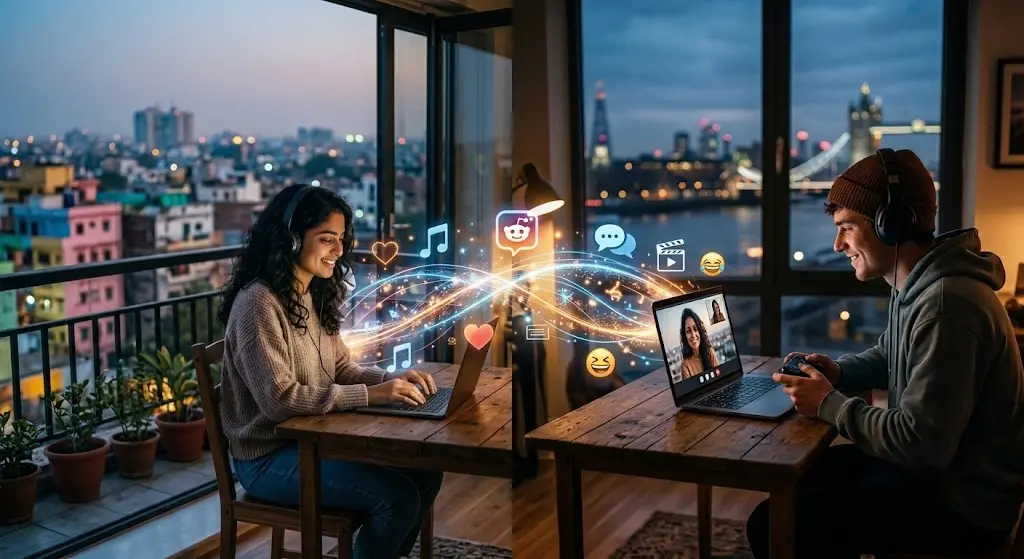
The internet has changed the way people communicate, but has also changed the ways in which people think and act when they know, or believe to know, that someone is watching them.
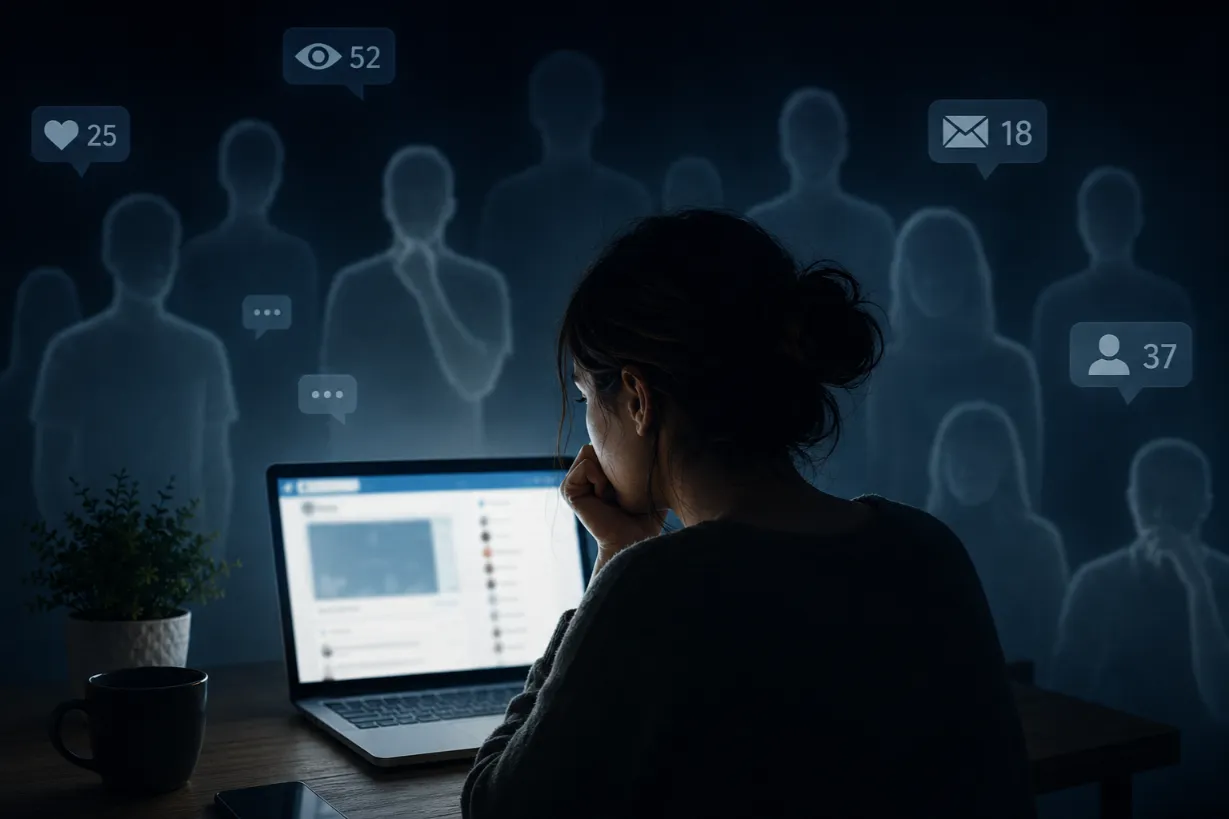
Many people think of social media as having an audience, but do not consider that behind every post is an imagined set of people who are just as important, if not more so, than those who see it directly. These invisible audiences can shape the things that people say and write, the things they delete, the things they search for, even the things that seem completely unremarkable.
The truth is that the internet is not a place for people to express themselves freely – it is more accurately a place of constant self-modification.
Posting for Someone Who May Never See
It Have you ever posted a picture, story, or status in the hopes that a particular person would see it? This is an interesting concept to ponder, and highlights one of the more strange aspects of internet culture. A post may have thousands of views, but one particular person, who was not mentioned by name or otherwise indicated, may subconsciously shape a post in significant ways. The internet is a place where we talk to everybody, and we think about the impact that our words may have on everybody, even when we talk to one person specifically.
The Deleted Post Has a Story Too
Internet culture is all about what appears on the internet, but very little is said about what disappears. When people make posts, say something they regret, or write something self-incriminating, they may think twice about leaving it up – and delete it before anyone sees it. The “delete” button has become a feature that people use to edit themselves, to modify what they say, and to prevent misunderstanding. People are not only responsible for the things that they say, but also responsible for the things that they remove.
The “Private” Internet Is Rarely Completely Private
Many internet users have an idea of the internet as a big public forum, but very few stop to think about the many ways the internet can keep people apart as well as bring them together.
Conversations that seem private may actually be very visible, and the things that people think of as “private” can very quickly, accidentally or otherwise, become quite public. The problem of “private” posts becoming public has been an issue for many years, as it becomes much easier to save or screenshot posts than it is to change their visibility.
Internet users, especially younger ones, have become aware of the fact that many things which may seem completely invisible online may actually be seen, if not by many than by some.
As a result, many people use different accounts for different audiences. It is common to see people using a public account, a close friends account, a temporary story account, and a private account all the same day – each one communicating slightly differently. The “walled off” nature of many social media accounts has made “privacy” an actively designed thing, not something that is guaranteed.
Our Online Personality Is Often a Collection of Small Choices
Sometimes, people talk about “online personalities” and “real personalities” as if one person’s behavior on the internet is a totally different set of behaviors from the person they portray offline. In reality, an “online personality” is often just a reflection of all the little things that a person does online, without really considering them. It is very common for people to think of the internet as a place of self-expression, but it is rare to think of it as a place of identity formation. An online profile is a collection of little things – the profile picture, the captions, the things that one writes about and the things that one does not write about, the accounts that one follows, the comments that one makes, even the spaces between posts.
Each one adds up to build a certain impression, and in turn, that impression can be mistaken for a person, or for part of a person.
The internet is a space where identity is fluid, changing depending on what a person chooses to say, when they say it, and what they say it about.
Why Old Posts Feel Like Messages From Another Person
One of the most bizarre things about using the Internet as a means of communication is that one can stumble across posts from oneself several years in the past – and may feel like they came from another person entirely. A five-year-old photograph or status update can seem alien, as if it belonged to someone else, not the person who posted it. The internet can be a means of storing the person that you were in the past. Many things from the past fade away and are forgotten, but on the internet, they can be perfectly preserved. The physical world cannot remember who you were, but the internet can.
The Future of Internet Culture May Be More Personal
As the technology evolves, the culture surrounding it will inevitably change as well. The internet is already known for allowing people to share in their interests and find like-minded people, but perhaps in the future it can be more personal than that. Many companies already use artificial intelligence to track what people like, watch, interact with, or search for on the internet – so it stands to reason that some of these algorithms will be able to do more than just recommend videos. The ability of technology to predict what we want to see can be used in different ways. If the internet becomes better and more personalized, the question must be asked – will it become less surprising? Perhaps the future of internet culture will be shaped by this push and pull between personalization and unpredictability.
Conclusion
While the internet is commonly thought of as a public forum, it has many private corners as well. Behind every post is an editor who considers what to put out there, and behind every delete button is someone who considers the impact that it will have. Behind every profile picture is a person who thinks about what it says about them. Perhaps the most interesting aspect of internet culture today is the ways in which people feel the need to communicate with imaginary audiences. And the strange part is, the audiences that people think are imaginary are not always that imaginary at all – in fact, they are likely to be the people who will one day be watching from the future.