




A first-ever ministerial meeting in New York produces a joint endorsement, an annual business forum, and one Slovak minister’s memorable choice of words
India’s decades-long push for a permanent seat at the United Nations Security Council picked up fresh institutional backing this week, as the four nations of the Visegrad Group declared their collective support for the bid during their first-ever ministerial meeting with New Delhi.
A Bloc India Had Been Courting Quietly
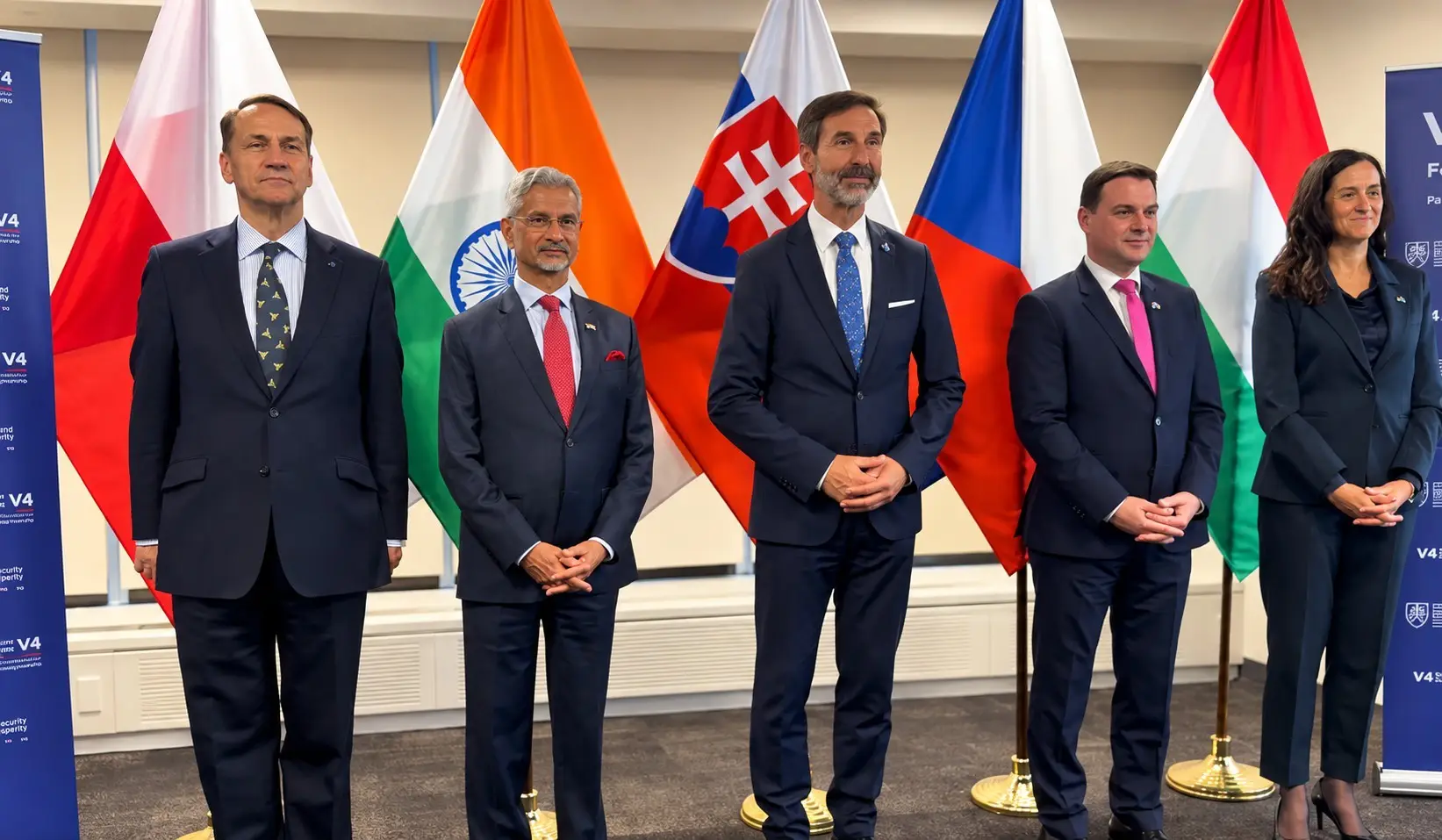
The endorsement came at the inaugural V4-India Foreign Ministers’ Meeting, convened on the sidelines of the 81st session of the UN General Assembly in New York. Poland, Hungary, the Czech Republic and Slovakia, the four countries that make up the Visegrad Group, sat down with External Affairs Minister S Jaishankar in a session that both sides described as a genuine milestone in a relationship that has developed gradually over recent years. Jaishankar’s own outreach to the region traces back to 2019, when his visit to Poland and Hungary marked the first ministerial-level engagement India had made with these countries in decades, laying quiet groundwork for what eventually became this week’s collective meeting.
A Line That Did the Rounds
Slovak Foreign and European Affairs Minister Juraj Blanar, who convened the session, used notably direct language in describing the group’s position afterward, telling reporters that all four V4 countries agreed India belonged at the table as a permanent Security Council member given its standing as part of the Global South and its emergence as a power in the Indo-Pacific region. Jaishankar, for his part, called the gathering a new historic occasion and thanked Blanar for bringing the four countries together in a single format with India for the first time. Beyond the headline endorsement, the meeting produced concrete next steps rather than just diplomatic goodwill. Both sides agreed to institutionalise the relationship through annual foreign ministers’ meetings going forward, alongside plans to establish a regular business forum aimed at deepening economic ties between India and the four Central European economies.
The Arithmetic Behind the Ask
India’s Security Council ambitions do not exist in isolation. The country is part of the G4 grouping alongside Brazil, Germany and Japan, four nations that have long supported each other’s bids for permanent membership while pushing a broader reform proposal that would expand the Council from its current fifteen seats to somewhere between twenty-five and twenty-six. That proposal envisions six new permanent seats distributed across regions currently underrepresented at the table, with two each allocated to Africa and the Asia-Pacific, and one each set aside for Latin America and the Caribbean and for Western Europe and other developed nations.
India’s bid already carries backing from several established powers, with France offering consistent support over the years, the United Kingdom endorsing the country’s inclusion in an expanded Council, and the United States backing the idea in principle. Russia has voiced support as well, a position reaffirmed just last week when China separately signalled its own backing during the BRICS Summit hosted in New Delhi, adding yet another permanent member to the list of countries at least nominally endorsing India’s candidacy.
Building a Relationship Beyond the Headline Ask
What distinguishes this week’s meeting from a purely symbolic gesture is the range of subjects the four ministers and Jaishankar covered beyond the Security Council question alone. The discussions extended to defence cooperation, space technology and education partnerships, alongside an exchange of views on major global flashpoints including the ongoing conflict in Ukraine and developments in the Gulf region. That breadth suggests both sides see this new format as a foundation for a more substantial relationship, rather than a one-time diplomatic courtesy timed to coincide with the UN General Assembly’s annual gathering.
Support Without a Guaranteed Outcome
None of this week’s developments bring India meaningfully closer to an actual reform of the Security Council’s structure in the near term, a process that has moved at a famously glacial pace through the UN’s Inter-Governmental Negotiation framework for years without producing a binding text. What this week’s meeting does add is another bloc of countries willing to publicly attach their name to India’s candidacy, a form of accumulating diplomatic capital that New Delhi has been steadily building through parallel engagements with the G4, the BRICS grouping and now Central Europe’s Visegrad Four. Whether that accumulated support ever translates into an actual Council seat remains, as it has for over two decades of similar declarations, a question with no clear timeline attached.