





Introduction
Language has always changed with time. New words, expressions and ways of communicating have entered our lives through books, films, music and popular culture. However, in the digital age, the internet has become one of the biggest influences on the way people speak. Words that were once limited to social media platforms, online games and private chats are now regularly heard in classrooms, colleges, offices and even family conversations.
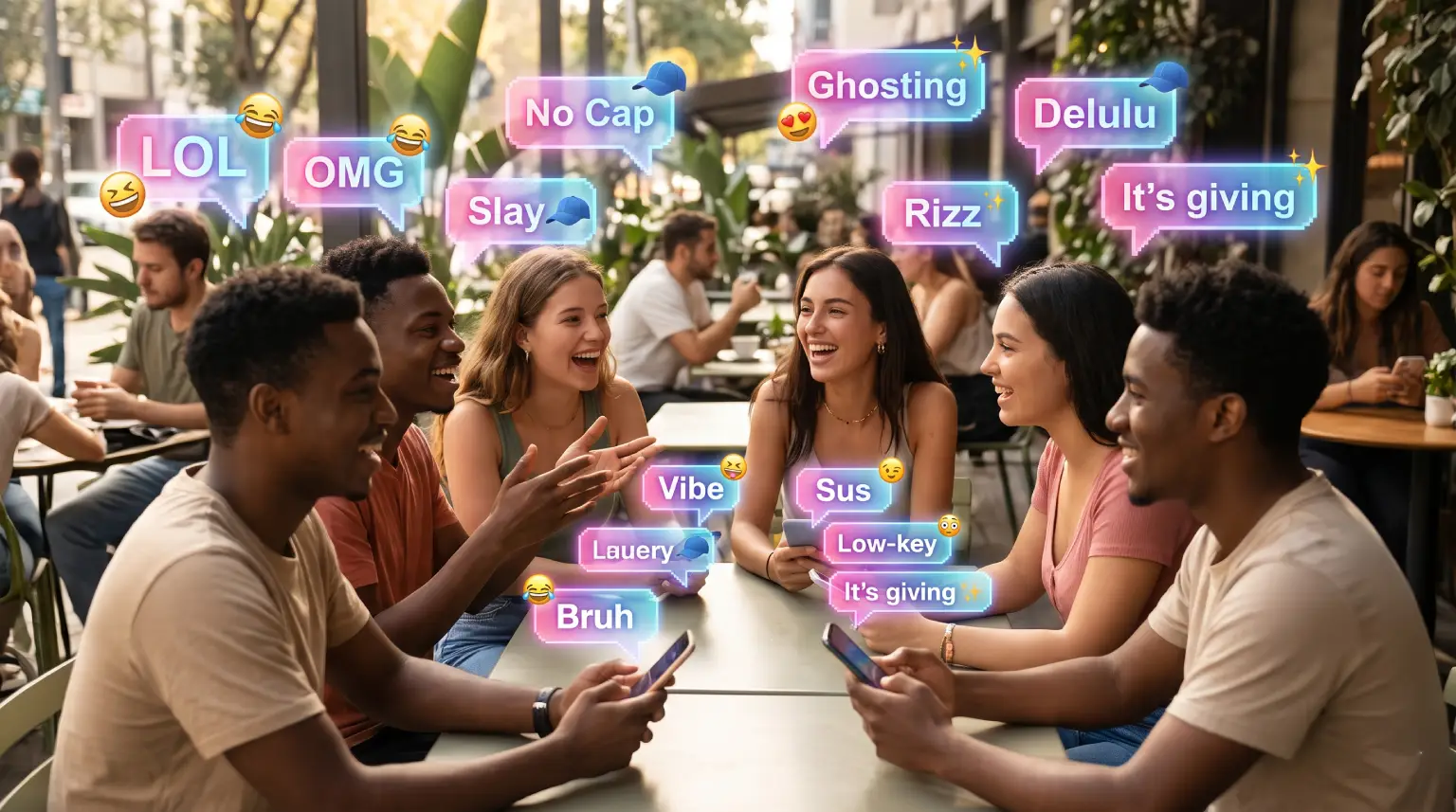
Expressions such as “LOL”, “OMG”, “No Cap”, “Slay”, “Ghosting” and “Vibe” have moved beyond computer and mobile screens. People use them while talking to friends, reacting to situations or expressing emotions. What makes this change interesting is how quickly an unfamiliar internet expression can become a normal part of everyday language.
The Internet as a New Language Creator
Social media has created an environment where language develops at an extraordinary speed. Platforms such as Instagram, Reddit, YouTube, Snapchat and X allow millions of people to communicate and exchange expressions every day.
Unlike traditional language development, which often takes years to spread through communities, internet slang can become popular within a few days. A funny comment, viral video or trending meme can introduce a completely new expression to thousands of people.
For example, the word “delulu”, originally associated with the word delusional, became popular in online conversations to describe unrealistic hopes or playful imagination. Similarly, “rizz” became a widely recognised expression for someone’s ability to attract or charm others.
The internet does not simply introduce new words; it gives existing words new meanings and makes language more creative.
How Online Expressions Enter Real Conversations
The journey of internet slang from screens to spoken conversations usually begins with repetition. When people repeatedly see an expression in reels, memes, comments or videos, they gradually become familiar with it.
At first, they may use the word only while chatting online. Later, they start including it in conversations with friends. Eventually, the expression becomes so familiar that using it feels natural.
For instance, someone watching a funny video might comment “I’m dead” to express extreme amusement. After seeing this expression repeatedly, they may start saying the same thing while laughing with friends.
This process shows that online language does not remain restricted to digital communication. It slowly becomes part of people’s everyday vocabulary.
The Role of Memes and Viral Content
Memes play an important role in spreading internet slang. They combine humour, images and short expressions to communicate complicated feelings in a simple way.
A single meme can introduce an expression to people who may not even follow the original creator. When users share, remix and recreate the same content, its language spreads across different online communities.
Words such as “sus”, “bruh”, “main character energy” and “it’s giving” have gained popularity through internet culture and repeated social media usage.
Memes also make language easier to remember. People often remember a funny expression because of the situation in which they first encountered it. As a result, internet slang becomes connected with shared experiences and inside jokes.
Young People and Changing Communication Habits
Young people are among the most active participants in internet culture. For many teenagers and college students, digital communication is an ordinary part of everyday life.
Internet slang allows them to express emotions, humour, disagreement and excitement without using lengthy sentences. A single word can sometimes communicate what would otherwise require an entire explanation.
However, this language also creates differences between generations. Expressions that seem completely normal to young people may sound confusing to parents, teachers or older relatives.
For example, a student might describe an event as “low-key amazing”, while someone unfamiliar with the expression may misunderstand its meaning.
These differences show how language reflects the experiences and cultural environments of different generations.
From Digital Identity to Social Identity
Internet slang is not just about using fashionable words. It also helps people express their identities and feel connected to particular communities.
People who understand certain expressions often feel that they belong to a particular online culture. Gaming communities, fandoms, college groups and social media circles develop their own vocabulary.
Using these expressions in real conversations can create an immediate sense of familiarity. It can make interactions more relaxed and help people connect through shared humour.
At the same time, slang can sometimes create barriers. People who are unfamiliar with particular expressions may feel excluded from conversations. Therefore, internet language can bring communities together while unintentionally separating others.
The Influence of Global Internet Culture
One interesting feature of internet slang is its ability to cross geographical and linguistic boundaries. An expression created in one country can become popular among users thousands of kilometres away.
In India, internet slang often mixes English with Hindi and other regional languages. Expressions such as “bro”, “scene kya hai”, “vibe match ho gayi” and “it’s giving” are frequently used in informal conversations.
This combination creates a unique style of communication that reflects India’s multilingual internet culture.
People do not always adopt expressions exactly as they appear online. They modify them according to their language, humour and local experiences. This makes internet slang a constantly evolving form of communication.
Does Internet Slang Affect Traditional Language?
The growing popularity of internet slang has raised questions about its influence on traditional language. Some people believe that excessive use of abbreviations and informal expressions can weaken formal communication.
However, language is not a fixed system. It naturally changes according to people’s needs and surroundings. Using slang with friends does not necessarily mean someone cannot communicate professionally in an academic or workplace environment.
The important thing is understanding the difference between informal and formal situations. Internet slang can make conversations entertaining, but clear and appropriate language remains essential in professional communication.
Conclusion
The journey of internet slang from screens to everyday conversations reflects a major change in modern communication. Words that once existed only in online comments and digital communities have become part of ordinary speech.
Social media, memes, viral videos and young internet users have helped create this transformation. Internet slang is no longer simply a collection of fashionable expressions; it represents humour, identity, creativity and social connection.
As technology continues to influence human interaction, new expressions will keep entering our vocabulary. Some will disappear as quickly as they arrive, while others may become permanent parts of everyday language.
Perhaps the most interesting thing about internet slang is that it reminds us that language does not belong only to dictionaries. It belongs to the people who use it, reshape it and give it new meaning every day.