


A New Guest in the World of Imagination
Creativity has always been considered one of the most beautiful qualities of being human. It is the ability to imagine something that does not exist, express emotions through words, turn ordinary experiences into stories, and give life to ideas. For generations, people have created paintings, music, films, photographs, and literature using their imagination and personal experiences. Today, however, a new participant has entered this creative world: Artificial Intelligence.
From generating digital paintings to writing poems, composing music, and editing videos, AI tools are becoming part of everyday creative activities. What once required hours of effort can now begin with a simple instruction typed into a computer. This development has opened exciting possibilities, but it has also raised an important question: when technology starts creating things, what happens to human creativity?
The Changing Meaning of Being Creative
Earlier, creativity was closely connected with personal skills, practice, and experience. A photographer needed to understand lighting, a writer had to spend hours developing a story, and an artist required patience to transform an idea into a painting.
AI has changed the process. Someone with little knowledge of graphic design can now generate an attractive poster, while a beginner can experiment with music without knowing how to play an instrument. These tools have made creative opportunities more accessible.
However, creativity is not simply about producing something beautiful. It also involves understanding why something should be created and what emotions it should communicate. AI can generate an image of a rainy street, but the memory of walking home in the rain after an unforgettable day belongs to the person who experienced it.
When Technology Becomes a Creative Partner
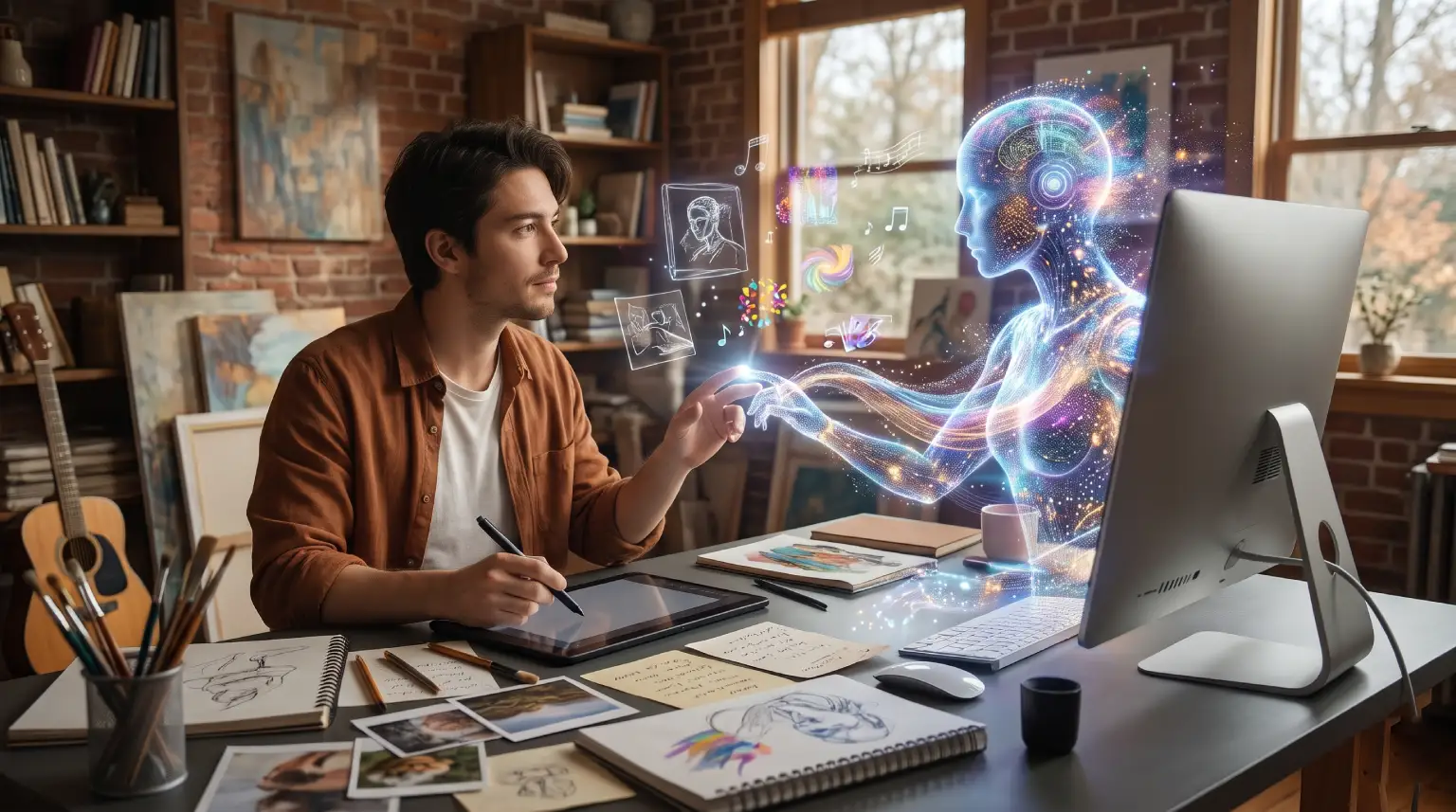
One interesting aspect of AI is that it does not always replace the creative process. Sometimes, it becomes a partner in it.
A content writer can use AI to explore different headlines, a filmmaker can experiment with visual concepts, and a designer can develop several layouts before selecting one. Instead of beginning with a completely blank page, creators can use technology to discover possibilities they might not have considered.
For independent creators and students, this can be especially useful. Limited budgets and technical knowledge often prevent people from expressing their ideas. AI tools can reduce some of these difficulties and allow them to concentrate on storytelling, experimentation, and communication.
The most interesting results often emerge when human imagination guides technological assistance rather than depending entirely on it.
Can a Machine Understand Human Emotions?
This is where the difference between human and artificial creativity becomes important.
A machine can produce a sad poem, a romantic scene, or an inspiring speech by recognising patterns in the information it has learned. It can arrange words in a way that appears emotional. However, producing emotional language is different from personally experiencing an emotion.
Human creativity is deeply connected with memories, relationships, disappointments, happiness, culture, and personal observations. A writer may create a powerful story because of something witnessed during childhood. A musician may compose a melody inspired by a particular memory.
AI can help express these experiences, but the original human experience gives them personal meaning.
This does not mean that AI-generated work cannot affect people. It means that the source of an idea and the emotional experience behind it deserve recognition.
The Fear of Losing Originality
As AI-generated content becomes more common, concerns about originality are growing. If thousands of people use similar tools, there is a possibility that creative work may begin to look and sound alike.
Another concern is that people might become too comfortable allowing technology to make creative decisions for them. Instead of developing their writing skills, they may depend on automatically generated paragraphs. Instead of experimenting with different artistic styles, they may accept the first image produced by a tool.
Over time, this could reduce opportunities for personal experimentation.
Originality does not always mean inventing something completely new. Sometimes, it means presenting an ordinary experience through an unusual perspective. That personal perspective is something creators should continue developing.
The Question of Ownership and Recognition
AI has also created difficult questions about ownership. If a person generates an artwork using an AI tool, who deserves credit? Is it the person who provided the instructions, the company that developed the software, or the artists whose existing works may have influenced the system?
These questions have become increasingly important for writers, photographers, musicians, and designers.
Creative professionals depend on recognition for their work. Therefore, transparency about AI involvement and respect for original creators are essential. Technology should create new opportunities without ignoring the contributions of people who have spent years developing their artistic skills.
Why Human Creativity Still Matters
Despite its impressive abilities, AI cannot replace every aspect of human imagination. People create not only to produce something useful but also to communicate experiences, question society, preserve memories, and understand themselves.
A handwritten letter may carry more meaning than a perfectly generated message because of the relationship behind it. A photograph taken during a family gathering may be technically imperfect but emotionally priceless.
These examples remind us that creativity is not always measured through perfection. Sometimes, its greatest value lies in the imperfections that make an expression personal.
Finding a Balance Between Imagination and Innovation
The future of creativity will probably involve both humans and artificial intelligence working together. The challenge is to understand where technology can help and where personal judgment should remain important.
AI can provide suggestions, save time, and make experimentation easier. Humans can provide direction, context, cultural understanding, and personal meaning.
The goal should not be to compete with machines in producing content faster. It should be to use technological progress to explore ideas more thoughtfully.
Conclusion
When artificial intelligence enters human creativity, it does not necessarily mark the end of traditional artistic expression. Instead, it introduces a new chapter in the way people imagine, communicate, and create.
The tools available to us may change, but the desire to tell stories, express emotions, and share experiences remains deeply human. AI may help create the picture, suggest the words, or arrange the music, but the intention behind meaningful creative expression still matters.
Perhaps the real question is not whether machines can become creative, but whether humans will continue using their own imagination while working alongside them. After all, technology can provide countless possibilities, but it is human curiosity that decides which possibilities are worth exploring.