




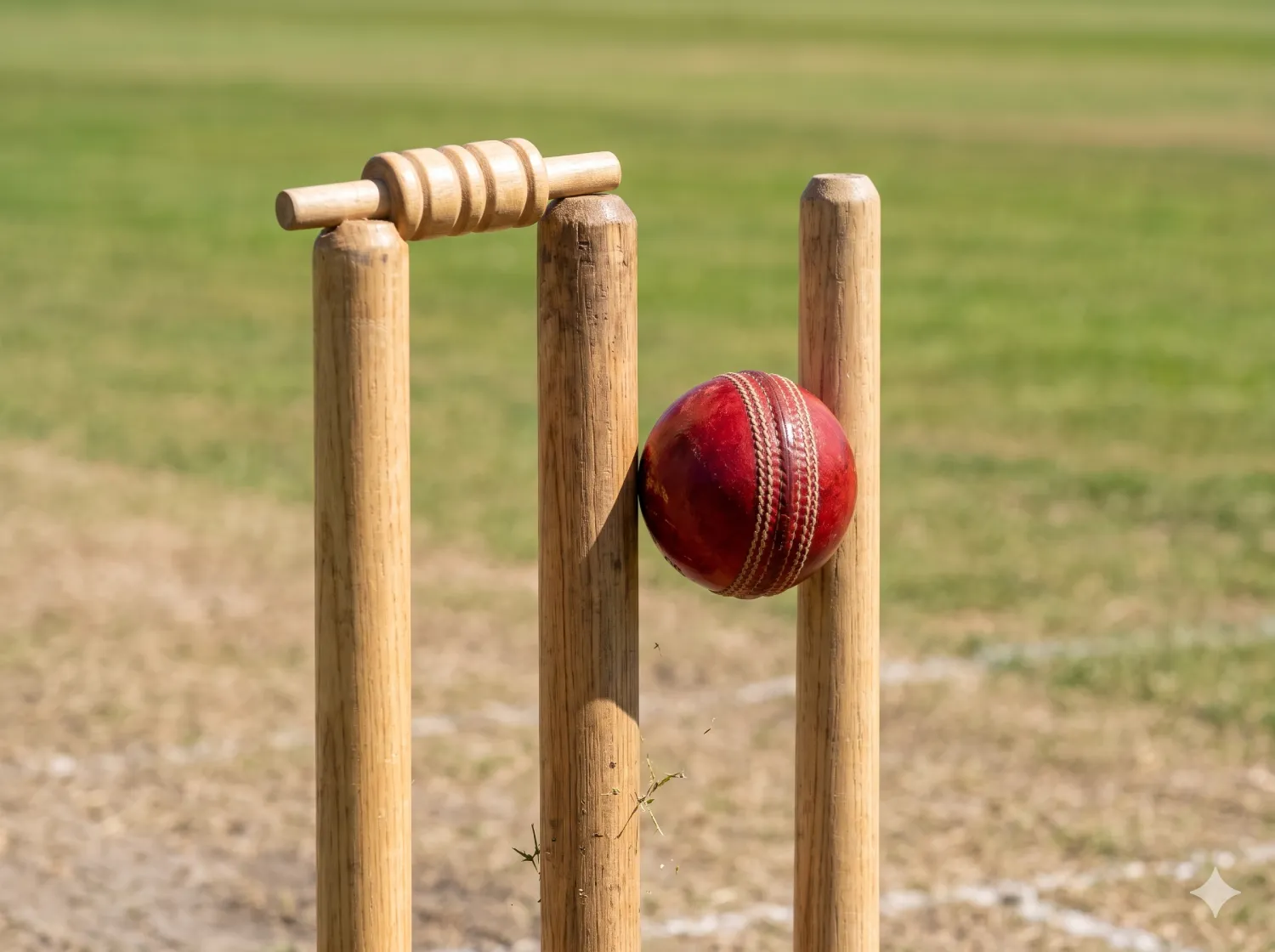
When a replay shows a ball clipping the stumps and the batter stays at the crease, the system is working as designed, not failing
Few moments in cricket cause as much argument as a review that returns “umpire’s call.” The ball seems to hit the stumps, the graphic shows red and green, and the on-field decision stands anyway. To many fans, the technology has hedged. In reality the label is an honest admission that a prediction is not a measurement, and it is built into the review system on purpose.
Three Questions Before a Wicket
Every lbw appeal is judged in three stages, and the review system revisits all of them. Stage one asks where the ball landed. If it pitched outside leg stump, the appeal fails straight away. Stage two asks where the ball hit the batter. The contact normally has to be in line with the stumps, though a batter who offers no shot at all can be given out even when struck outside off stump. Stage three asks whether the ball would have gone on to hit the stumps. Stages one and two are established by what the cameras recorded. Stage three has to be predicted, and that gap between recorded fact and estimate is where the whole umpire’s call debate begins.
How the Ball Gets Tracked
Ball-tracking systems such as Hawk-Eye use a ring of high-speed cameras around the ground. By comparing the ball’s position in each camera’s view, the software works out its path through the air in three dimensions up to the point where the ball hit the pad. It then projects that flight forward to the stumps. Because the extrapolation covers a short distance, it is very accurate, but small uncertainty grows the further the projection has to travel after impact.
Where Umpire’s Call Comes In
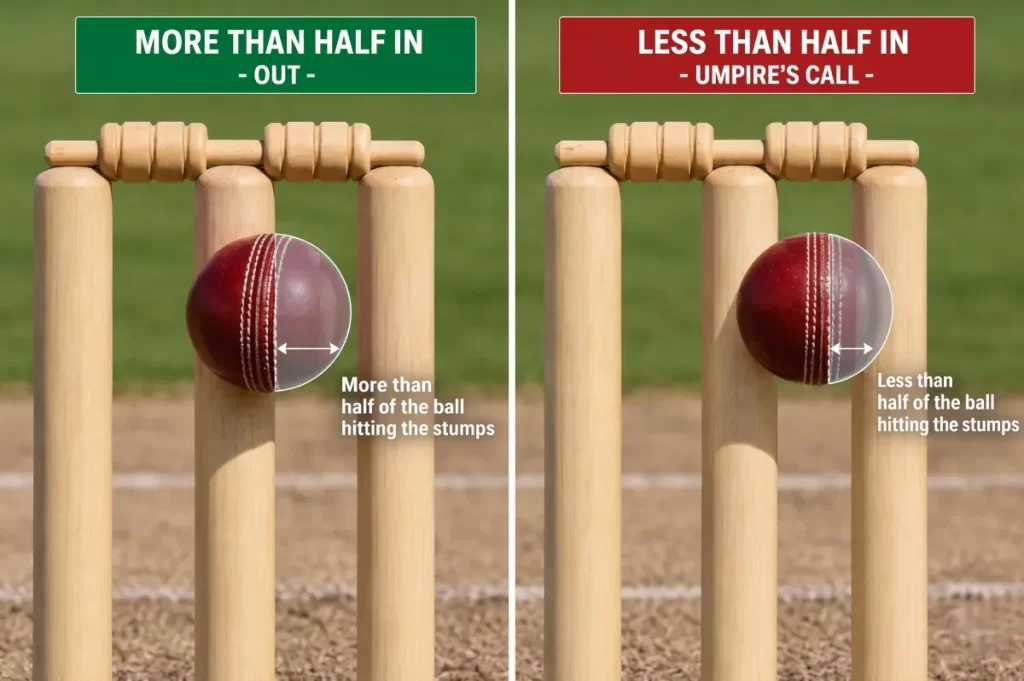
The system is not asked to say whether the ball would have hit the stumps with certainty. It is asked how much of the ball would have hit them. If at least half of the ball’s width is predicted to strike the stumps, the on-field umpire’s decision is overturned or confirmed accordingly. If less than half would strike, the system treats the outcome as too close to overrule and leaves the umpire’s original call in place. The same logic applies to the pitching and impact checks, with their own zones.
Why the Zone Is Not Wider or Narrower
Setting the line at half the ball is a compromise. A stricter rule, requiring the entire ball to hit the stumps, would turn almost every close decision into a not-out. A looser rule, giving a wicket for any touch at all, would turn them into outs on predictions the technology cannot fully support. The half-ball threshold gives the on-field umpire the benefit of the doubt on the tightest cases and lets the technology correct clear errors.
The Other Tools in the Booth
Reviews draw on more than ball tracking. Edge detection uses a sensitive microphone near the stumps, paired with video, to show whether the ball touched the bat. Sound-based software called Snicko charts the audio so the third umpire can see spikes that match a faint edge. These tools answer a different question from lbw, and they are judged on what the third umpire can see and hear, not on a probability.
India and the Slow Road to Acceptance
The review system arrived in Test cricket around 2008 and 2009, and the Indian board was among its most prominent sceptics for years, doubting that ball-tracking was accurate enough to overturn human decisions. India eventually agreed to use it in a bilateral Test series in 2016, and it is now part of the regular playing conditions. The discomfort has not vanished, though, and the umpire’s call debate remains the sharpest example.
What to Watch For Next Time
When a review comes up, look for three things on the graphic: where the ball pitched, whether the impact marker sits in the green zone, and how much of the ball touches the stumps in the final frame. If the last image shows a sliver, expect the umpire’s call label. The result is not the system dodging a decision but the system saying how close it was.