





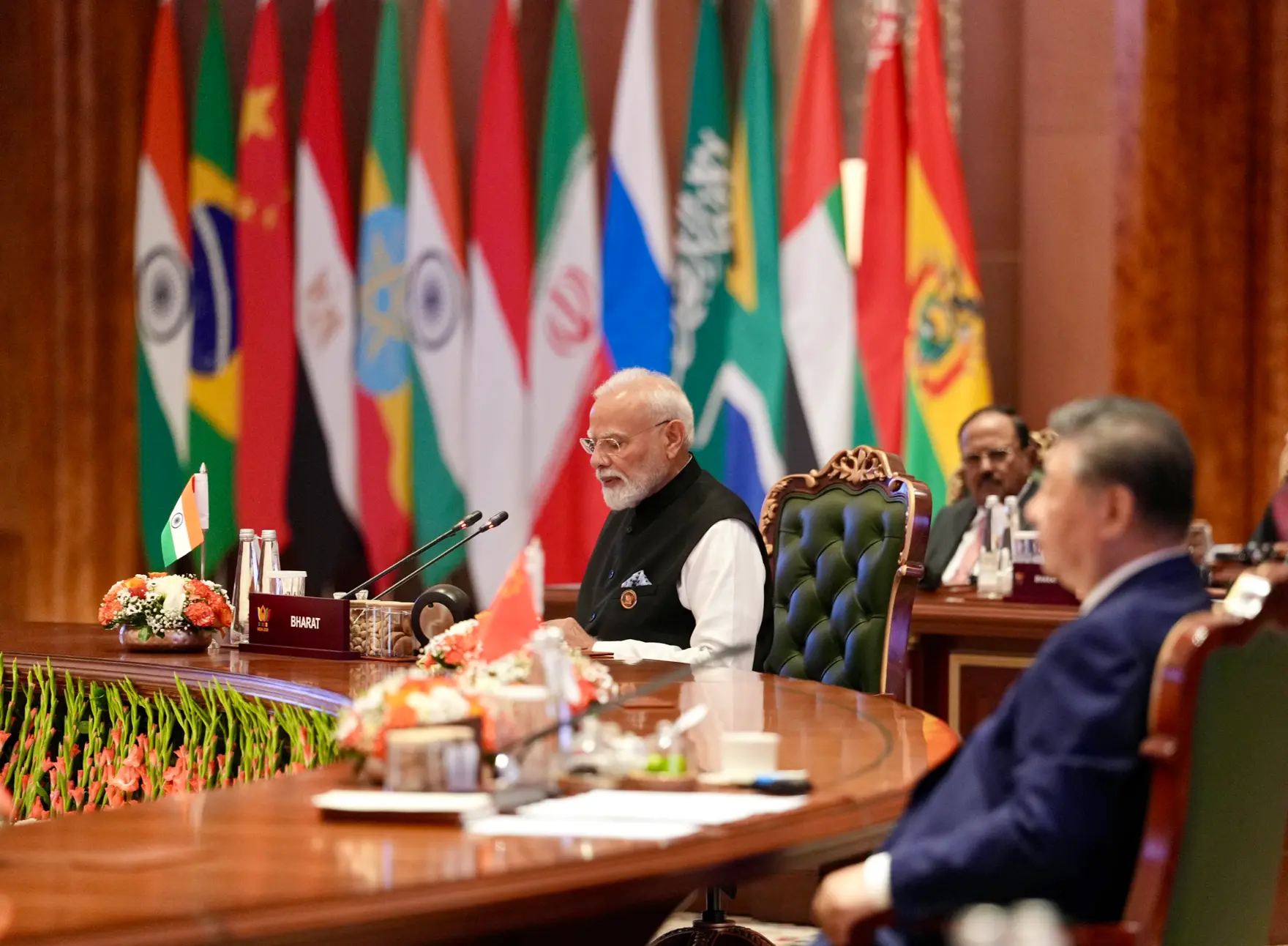
The 18th Summit closes with China backing India’s push for a permanent UN Security Council seat and a joint declaration that steers carefully around naming any single country
For three days this week, Bharat Mandapam in New Delhi became the meeting point for leaders representing roughly half the world’s population, as India hosted the 18th BRICS Summit and closed proceedings with the adoption of the New Delhi Declaration. Beyond the ceremonial photographs and bilateral handshakes, the summit produced outcomes that several analysts are already describing as a genuine turning point in how the grouping positions India within global governance debates.
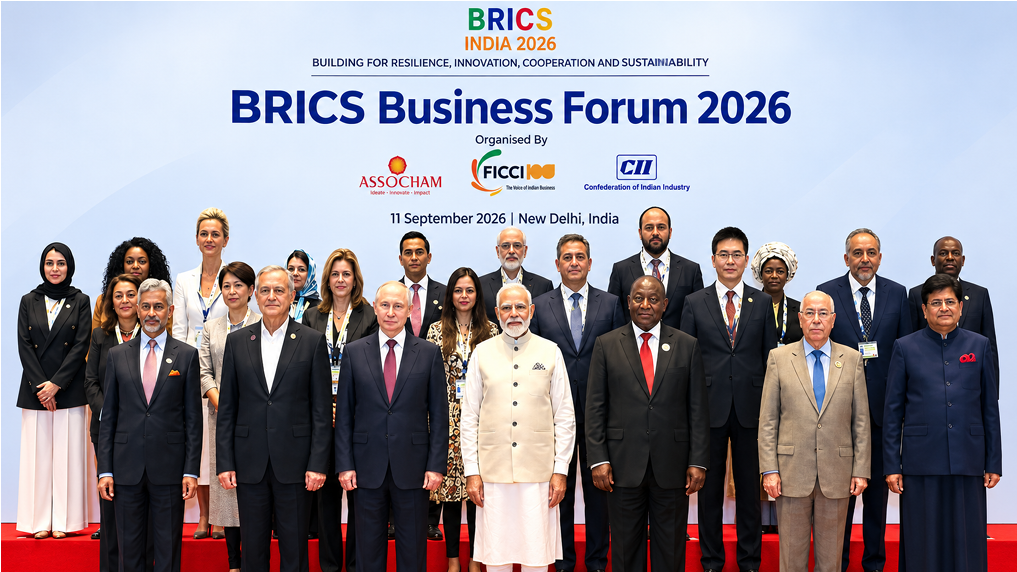
Leaders of BRICS nations pose for a group photograph during the 18th BRICS Summit at Bharat Mandapam in New Delhi
A Seat at the Table, Finally Within Reach
Perhaps the most consequential line in the entire declaration was also one of its quieter ones. BRICS leaders reiterated their support for India and Brazil to play a greater role in the United Nations, explicitly including the Security Council, while also backing China and Russia’s existing status as permanent members. What made this iteration notable was the accompanying signal from Beijing itself, with China offering its own support for India’s bid for permanent Security Council membership, a shift that arrives alongside a broader thaw in India-China relations following talks between Prime Minister Narendra Modi and President Xi Jinping on the summit’s sidelines.
The two leaders reportedly discussed strengthening bilateral ties, expanding trade and economic cooperation, and maintaining peace along their shared border, with both sides expressing an interest in preventing differences from escalating into full-blown disputes.
Naming Grief Without Naming Names
The declaration did not shy away from addressing terrorism directly, condemning the 2025 Pahalgam attack, which killed 26 people, in the strongest possible terms. All BRICS members, including Russia and China, signed on to language calling out cross-border terrorism, a notable point of consensus for a grouping that includes countries with sharply differing security relationships in South Asia. True to form for a bloc built on careful diplomatic balancing, the broader document largely avoided naming specific countries even where its language pointed clearly in a particular direction, a pattern that extended to its references to unilateral tariff measures widely understood to target recent American trade policy.
Building Bridges Far From Home
India’s role at this summit extended well beyond hosting duties. The country reportedly played a key mediating part in helping the United Arab Emirates and Iran reach a joint statement on the sidelines of the summit, an achievement that speaks to India’s growing comfort operating as a bridge-builder in West Asian diplomacy. The declaration itself addressed regional tensions more broadly, welcoming the ceasefire in Lebanon and calling for full implementation of UN Security Council Resolution 1701, while also condemning the use of starvation as a method of warfare and voicing support for the mandate of UNRWA, the UN agency serving Palestinian refugees.
Money Talk Without a New Currency
On the economic front, the summit’s outcomes were more incremental than revolutionary. Despite persistent speculation ahead of the summit about a potential common BRICS currency, no such mechanism was launched. Instead, leaders focused on advancing cross-border payment cooperation and expanding the use of local currencies in trade settlements among member nations, continuing a gradual, multi-year push to reduce reliance on the US dollar in intra-BRICS commerce without making any dramatic near-term break from it.
Putin’s Visit Adds Its Own Storyline
Russian President Vladimir Putin’s presence at the summit produced its own set of headlines, with a 45-minute bilateral meeting between him and Modi covering nuclear energy cooperation and trade ties between the two countries. The discussion added another data point to a relationship that has remained steady even as India has simultaneously worked to deepen economic and technological ties with Western partners, underscoring the balancing act that has come to define India’s foreign policy approach in recent years.
Looking Beyond the Group Photo
With the summit now concluded and delegations departing New Delhi, the real test lies in whether the commitments captured in the New Delhi Declaration translate into concrete follow-through over the coming year. Reform of institutions like the UN Security Council has been discussed at BRICS summits for years without meaningful structural change, and this year’s fresh backing from China, however significant symbolically, does not by itself alter the arithmetic of Security Council reform, which requires broader consensus well beyond the BRICS grouping. Still, for a summit that India spent months preparing to host under the theme of resilience, innovation, cooperation and sustainability, walking away with explicit Chinese support for its UN ambitions and a visible diplomatic win in West Asian mediation gives New Delhi tangible outcomes to point to well after the leaders have gone home.