





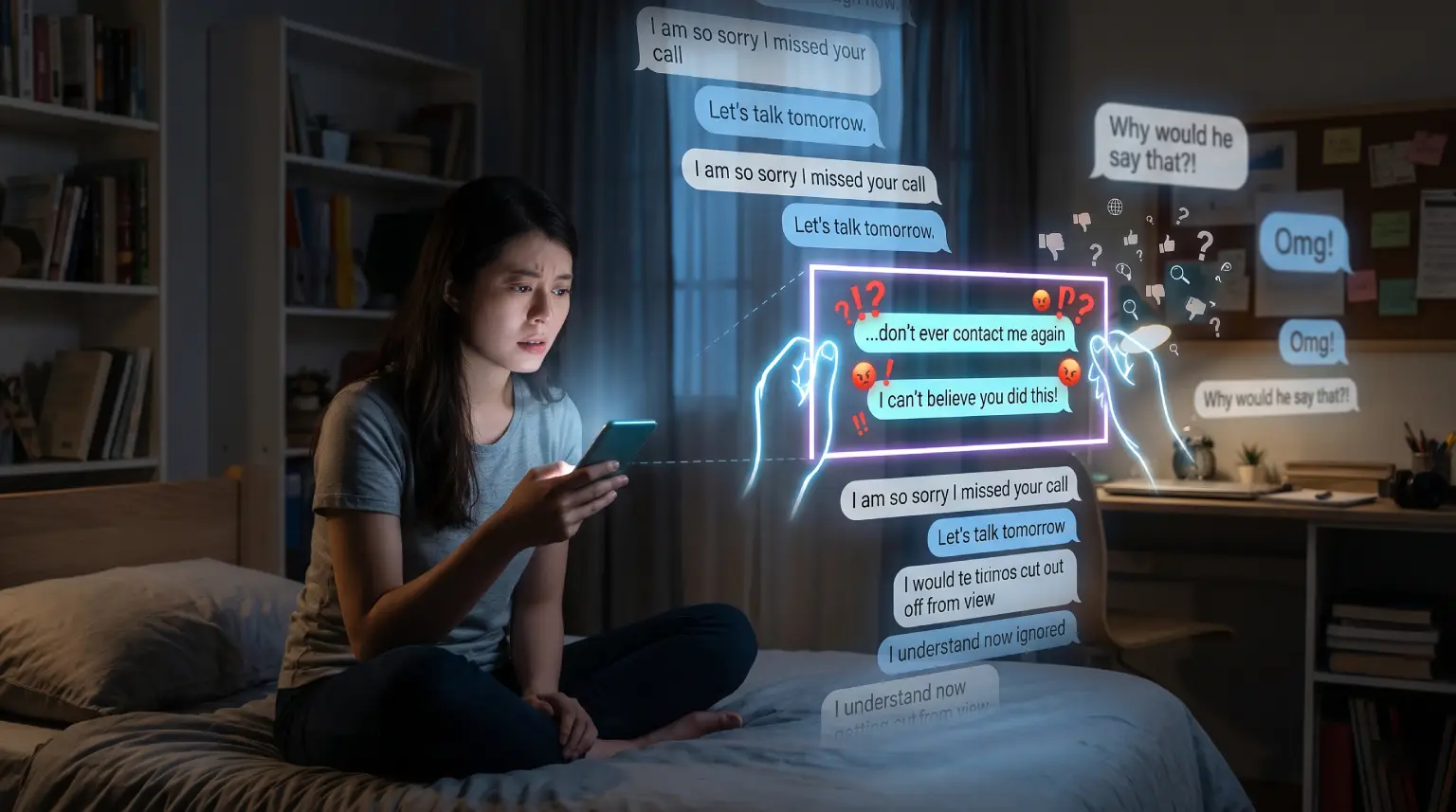
A single screenshot can change the way people see a person, understand a situation, or judge an entire conversation. In today’s digital world, screenshots have become more than just a way to save something on a screen. They are used as evidence, shared as gossip, posted as entertainment, and sometimes treated as the final truth. A conversation that once existed between two people can suddenly become the subject of discussion among hundreds or thousands of strangers.
The interesting part is that a screenshot does not always tell a complete story. It captures a particular moment, but it cannot always explain what happened before or after it. Yet, people often form strong opinions based on those few visible lines.
The Power of a Single Screenshot
Screenshots have become one of the easiest ways to share information online. Instead of explaining an entire incident, someone can simply upload an image of a conversation and let others interpret it.
A private message, a comment, or even a small argument can quickly become public content. People share screenshots because they are easy to understand and require very little explanation. A few sentences can create curiosity, anger, sympathy, or amusement.
This convenience also gives screenshots enormous influence. Sometimes, people believe what they see in an image without questioning its source or background. The visual format makes information appear convincing, even when important details are missing.
When Context Disappears
The biggest problem with screenshots is the loss of context. Every conversation has a background. There may be earlier messages, misunderstandings, jokes, personal experiences, or explanations that are not visible in the captured image.
Imagine two friends having an argument. One person shares only the message that makes the other look unreasonable. Anyone viewing that screenshot might immediately take sides. However, the complete conversation could reveal that both people misunderstood each other.
This is how a small part of reality can create a completely different impression. The screenshot may be genuine, but the conclusion drawn from it may still be misleading.
Social Media and the Culture of Instant Judgement
Social media encourages people to react quickly. A screenshot appears on a platform, and within minutes, users start commenting, sharing opinions, and choosing sides.
Many people do not wait for explanations because online discussions move at an extremely fast pace. The first version of a story often receives more attention than later corrections.
This creates a culture where judgement sometimes comes before understanding. People may label someone dishonest, rude, selfish, or insensitive after reading just a few lines of a conversation.
The pressure to have an immediate opinion also makes online discussions more emotional. Instead of asking what actually happened, users often focus on deciding who is right and who is wrong.
Screenshots as Digital Evidence
There is no denying that screenshots can be useful. They can help people preserve important conversations, document online harassment, record agreements, or provide evidence when something inappropriate happens.
In situations where messages are deleted or information is changed, screenshots may help establish what was originally displayed.
However, digital evidence also needs careful examination. Images can be edited, cropped, rearranged, or presented without their original context. Even an authentic screenshot may leave out information that changes the meaning of the conversation.
Therefore, screenshots should be treated as pieces of evidence rather than complete proof of an entire incident.
The Impact on Personal Relationships
The screenshot culture has also changed the way people communicate privately. Some individuals now hesitate before sending personal messages because they worry that their words might be shared publicly.
A conversation meant for one person can become entertainment for an entire online audience. This creates uncertainty and affects trust between friends, classmates, colleagues, and even family members.
People may begin choosing their words carefully, not because they want to communicate better, but because they fear being misunderstood through a screenshot.
As a result, private communication can become less comfortable. The possibility of a message becoming public changes the meaning of having a private conversation.
The Responsibility of the Person Sharing It
Sharing a screenshot is not always harmless. Before posting someone’s private conversation, it is important to consider whether sharing it is necessary, fair, and respectful.
People should think about the privacy of everyone involved. A screenshot containing personal details, phone numbers, names, or sensitive information can create problems beyond the original disagreement.
There is also a difference between exposing genuine wrongdoing and sharing private messages simply to embarrass someone. The intention behind sharing matters.
Responsible internet users should avoid spreading unverified screenshots and should give people a reasonable opportunity to explain their side of the story.
Learning to Look Beyond the Image
In a world where information travels through images, the ability to question what we see has become increasingly important.
Before believing or sharing a screenshot, users should ask a few basic questions: Who shared it? Is the conversation complete? What happened before this message? Has the other person explained the situation?
These questions do not mean that every screenshot is false. They simply remind us that digital information needs thoughtful interpretation.
Being careful does not mean refusing to believe anyone. It means understanding that one image cannot always represent an entire situation.
Conclusion
A screenshot can preserve a moment, but it cannot always preserve its meaning. It can show what someone wrote, but it may not explain why they wrote it. It can reveal a conversation, but it cannot always reveal the complete relationship behind it.
As internet culture continues to grow, screenshots will remain an important part of how people communicate, share experiences, and present information. However, the responsibility to understand what we see belongs to every internet user.
Perhaps the biggest lesson is simple: before allowing a screenshot to decide what we think about someone, we should remember that every image has a story outside its borders. Sometimes, the most important part of a conversation is precisely the part that the screenshot does not show.