


Introduction
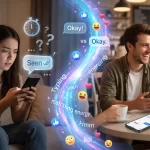
Have you ever noticed that the person you are on the internet is not always the same person you are in real life? Someone who remains quiet in a classroom might be very expressive on social media. A person who rarely shares personal feelings with friends may write emotional thoughts in an online community. Similarly, someone who appears confident on Instagram might struggle with self-doubt when the screen is turned off.
The internet has given people a space to present different sides of their personalities. Through social media profiles, comments, photographs, gaming platforms and online communities, we create versions of ourselves that reflect different interests, moods and experiences. These identities are not necessarily fake, but they reveal how differently we behave depending on the environment.
The Internet as a Place for Self-Expression
In earlier times, people’s identities were largely understood through their families, friendships, education and social surroundings. Today, the internet has added another dimension to how people express themselves.
A social media profile can become a small representation of someone’s personality. The photographs we upload, the music we share, the pages we follow and the opinions we express all communicate something about us.
For some people, the internet provides an opportunity to express thoughts that they find difficult to communicate face-to-face. It allows them to explore their interests, share creative work and connect with people who understand their experiences.
In this way, the internet has become more than a communication platform. It has become a space where people continuously discover and present different aspects of themselves.
Different Platforms, Different Personalities
One interesting feature of online identity is that people often behave differently on different platforms.
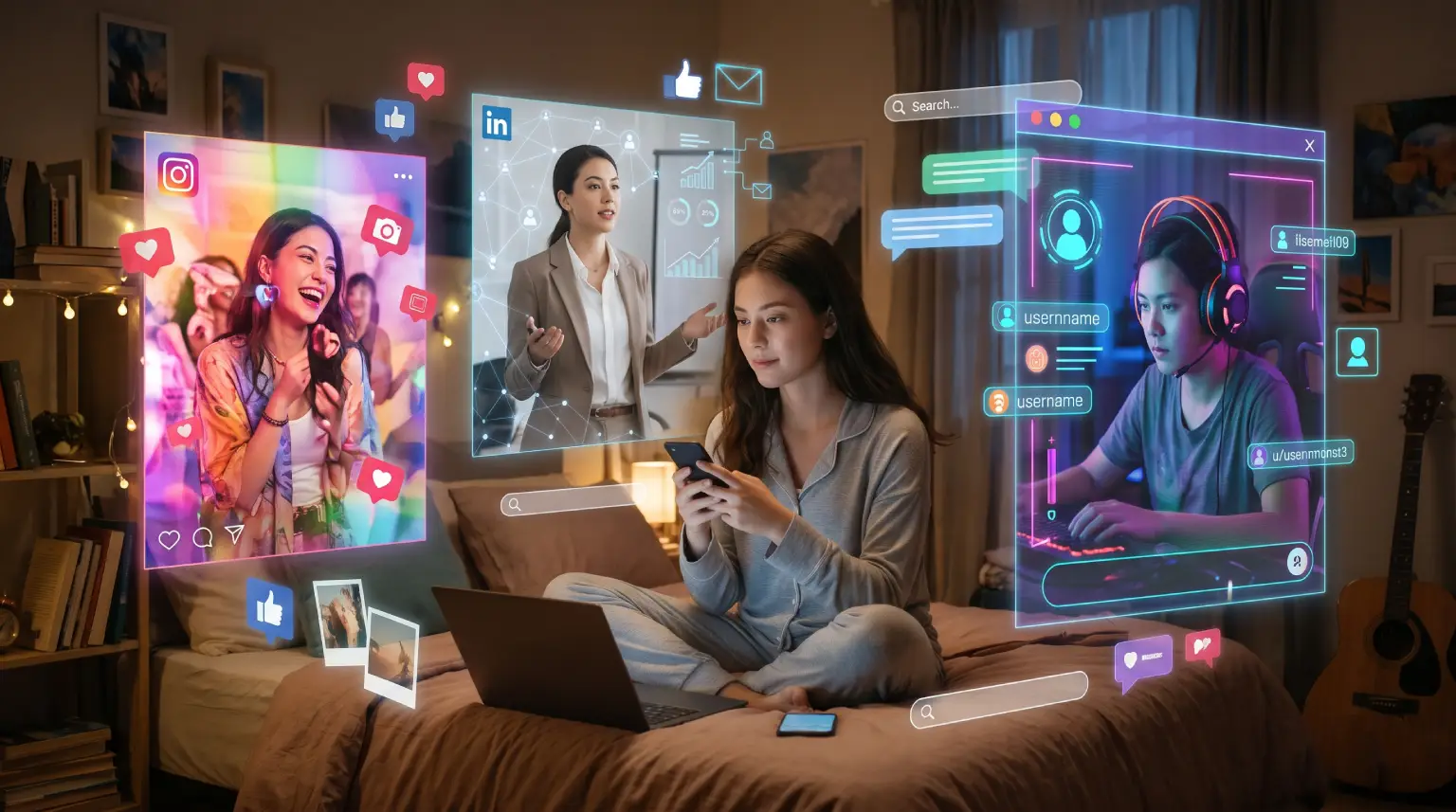
On Instagram, someone might prefer sharing photographs, celebrations and memorable moments. On LinkedIn, the same person may present professional achievements, career interests and educational experiences. On Reddit, they might participate in discussions without revealing their real identity. In gaming communities, they may develop an entirely different personality through an online username.
Each platform encourages a particular style of communication. People naturally adjust their expressions according to the audience and environment.
This does not automatically mean they are pretending to be someone else. It simply shows that human personalities have several dimensions, and different situations bring different dimensions forward.
The Pressure to Maintain a Perfect Online Image
Although the internet offers freedom of expression, it also creates pressure to maintain a particular image.
Many people carefully select what they post. They may share their achievements but avoid discussing their failures. They upload photographs from enjoyable occasions while keeping ordinary or difficult moments private.
Gradually, this selective presentation can create an expectation that life should always look interesting, successful and happy.
The pressure becomes stronger when people start comparing their everyday experiences with the carefully edited lives of others. They may feel that their own lives are less exciting because they rarely see the ordinary moments behind someone else’s profile.
As a result, maintaining an online identity sometimes becomes an exhausting responsibility rather than an enjoyable form of expression.
Anonymous Identities and the Freedom to Be Different
Anonymity is another important part of internet culture. Not everyone wants their online activities connected to their real name or identity.
Anonymous accounts allow people to discuss personal interests, ask questions and participate in conversations without revealing their background. Some individuals feel more comfortable expressing unpopular opinions or sharing experiences when they are not personally identifiable.
However, anonymity also comes with responsibility. The absence of a visible identity can sometimes encourage people to behave disrespectfully or make comments they would avoid in face-to-face conversations.
Therefore, an anonymous identity can offer freedom, but it should not become an excuse to forget basic human values.
When Online and Offline Identities Collide
Problems can arise when the different versions of a person begin to overlap.
A casual comment, an old photograph or a private opinion can unexpectedly reach an audience for which it was never intended. Something shared among friends may become visible to classmates, relatives, teachers or future employers.
This reminds us that the internet has a long memory. Content that appears temporary can remain accessible for years.
People therefore need to understand that online expression carries real-world consequences. Being thoughtful about privacy, personal information and digital behaviour is an important part of responsible internet use.
Are These Versions Fake or Simply Different?
Perhaps the most interesting question is whether having multiple online identities means that we are being dishonest.
The answer is not necessarily. Human beings have never had just one fixed personality. We behave differently with family members, close friends, teachers and strangers. Our language, confidence and expressions change according to the people around us.
The internet has simply made these differences more visible.
The person who shares funny memes, the student who posts academic achievements and the individual who discusses emotional experiences anonymously may all be genuine versions of the same human being.
The important distinction is between expressing different sides of ourselves and deliberately creating a false image to mislead others.
Conclusion
The internet has changed the way people understand and present their identities. It allows us to experiment with self-expression, discover communities and communicate beyond geographical boundaries. At the same time, it introduces challenges involving comparison, privacy and the pressure to appear perfect.
Perhaps we do not need to choose just one version of ourselves for the digital world. We can be creative on one platform, professional on another and completely ordinary somewhere else.
What matters is remembering that behind every username, photograph and profile is a real person with experiences that cannot be fully captured by a screen. Our online identities may have many versions, but they should never make us forget who we are beyond the internet.