




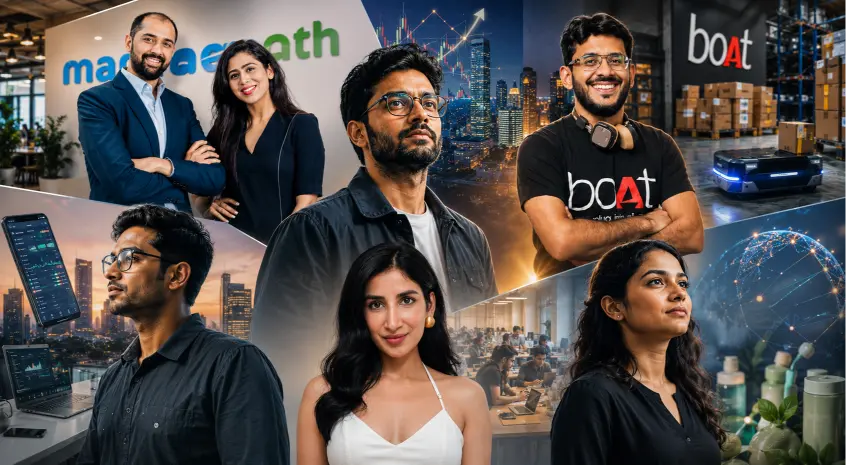
A decade ago, most Indian companies built their identity around the business itself. The founder often stayed behind the scenes while the brand took center stage.
That model is changing rapidly.
Today, many of India’s fastest-growing businesses are being shaped not just by products or services, but by the personalities leading them. Founders are no longer invisible operators quietly running companies in the background. They are becoming the face of the brand, the voice of the business, and in many cases, the biggest driver of consumer trust.
From startups and D2C brands to technology companies and new-age businesses, founder-led companies are becoming one of the defining trends in India’s modern business ecosystem.
Why Founder-Led Companies Are Growing Faster in India
The internet has changed how businesses connect with people.
Consumers today want more than polished advertisements and corporate messaging. They want transparency, relatability, and stories they can connect with. This shift has created an environment where founders themselves have become powerful brand assets.
Whether it is through LinkedIn posts, podcasts, interviews, YouTube appearances, or social media content, founders are now building direct relationships with audiences. People are not just buying products anymore. They are buying into the vision, personality, and credibility of the people behind the company.
This is one reason founder-led brands often build stronger communities compared to traditional corporations.
In India especially, where entrepreneurship is increasingly celebrated, audiences are naturally drawn toward founder journeys. Stories of building businesses from small apartments, taking risks, surviving failures, and scaling companies resonate strongly with young professionals and aspiring entrepreneurs.
Personal Branding Is Becoming a Business Strategy
In the past, personal branding was associated mostly with celebrities and public figures. Today, founders are realizing that visibility can directly impact business growth.
A founder with a strong public presence can attract investors, talent, partnerships, media attention, and customer trust much faster than a company relying only on traditional advertising.
This shift is particularly visible in India’s startup ecosystem.
Founders are now actively creating content, sharing opinions, discussing market trends, and documenting their entrepreneurial journey online. Platforms like LinkedIn and X have effectively become modern business stages where founders build authority in public.
The result is a more human connection between businesses and consumers.
People trust people more than logos. And in a highly competitive market, that trust can become a major advantage.
India’s Startup Boom Created the Perfect Environment
India’s startup ecosystem has grown dramatically over the last decade. The rise of fintech, edtech, healthtech, SaaS, D2C brands, and AI-driven companies has created an entirely new generation of entrepreneurs.
Unlike traditional legacy businesses, these startups were built in the digital era. Their founders understood social media, internet culture, and online storytelling from the beginning.
As competition increased, many founders realized that strong visibility could separate them from thousands of similar businesses entering the market.
In many cases, the founder became the marketing engine.
A relatable founder story often generates more engagement than expensive advertising campaigns. Investors also tend to back founders who can communicate clearly, inspire confidence, and build public trust around their vision.
This is one reason why founder-led businesses are attracting increasing attention in India’s venture capital ecosystem.
Consumers Connect More With Human Stories
One of the biggest reasons behind the rise of founder-led companies is emotional connection.
Corporate branding often feels distant and overly polished. Founder-led communication feels more personal. When consumers see founders discussing challenges openly, sharing behind-the-scenes moments, or speaking authentically about their journey, the brand begins to feel more relatable.
This approach works particularly well with younger audiences. Gen Z and millennial consumers are far more likely to support brands they emotionally connect with. They care about authenticity, culture, values, and the story behind the business.
In many ways, founders are becoming modern-day storytellers for their companies. And in the attention economy, stories travel faster than advertisements.
The Risks of Building a Founder-Led Brand
While founder-led companies have advantages, the model also comes with risks.
When a brand becomes heavily associated with one individual, the company’s reputation can become vulnerable to the founder’s public image. A controversy, poor decision, or negative public perception can directly impact the business itself.
There is also the challenge of scalability. As companies grow larger, building systems and leadership structures beyond the founder becomes essential.
Some businesses struggle when everything revolves around one personality for too long. This is why successful founder-led companies eventually evolve into institution-led businesses while still maintaining the founder’s vision and identity.
The Future of Founder-Led Companies in India
India is entering a phase where founders are no longer just entrepreneurs. They are becoming creators, educators, influencers, investors, and public personalities all at once. This shift is changing how modern businesses are built.
In the coming years, founder visibility will likely become a standard part of business strategy across industries, especially for startups and digital-first brands.
The companies that grow fastest may not always be the ones spending the most on advertising. Instead, they could be the businesses led by founders who know how to build trust, communicate authentically, and create communities around their vision.
Because in today’s business world, people increasingly want to know not just what a company sells, but who is building it and why.