





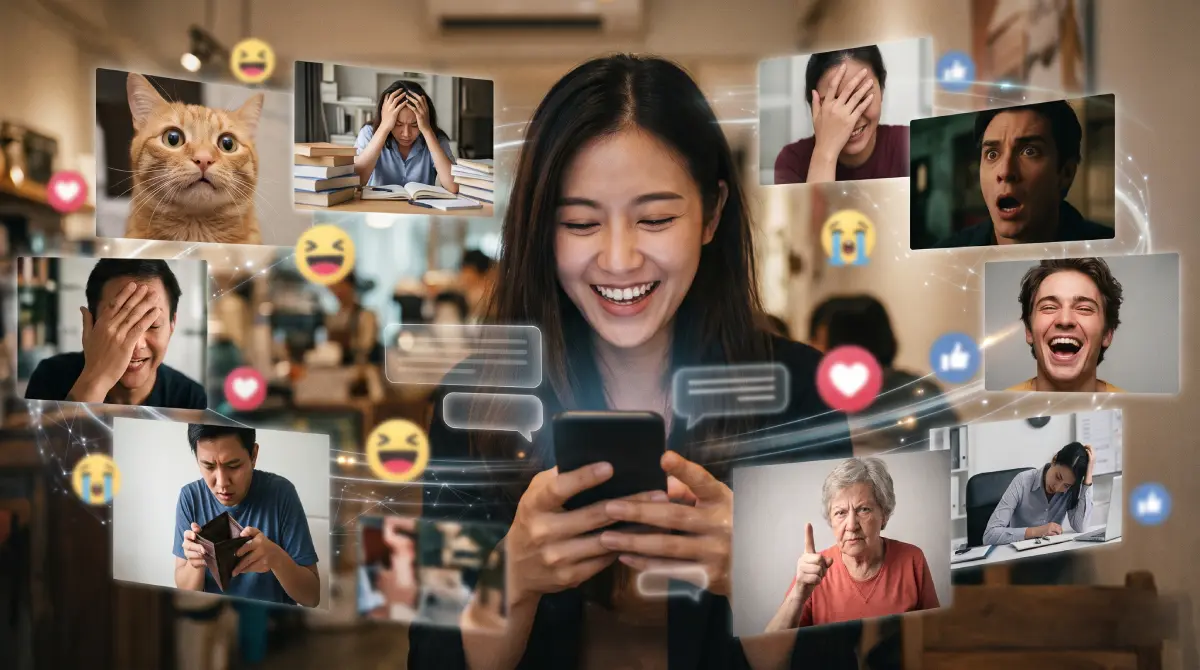
A few years ago, expressing a feeling usually meant finding the right words. Today, sometimes all it takes is a picture of a confused cat, a dramatic movie reaction, or a perfectly timed screenshot. Someone sends a meme, and suddenly an entire conversation happens without anyone typing a complete sentence. This is how memes have quietly become one of the most recognisable languages of the internet.
More Than Just Funny Pictures
Memes are often treated as simple jokes shared to pass the time. However, their role in digital communication goes much deeper. They combine images, words, expressions, sounds, and familiar situations to communicate ideas in a way that feels quick and natural. A meme can express embarrassment, excitement, frustration, disappointment, or even affection without directly naming the emotion.
Imagine a student opening a textbook the night before an examination. Instead of explaining the panic, the student shares a meme about suddenly becoming religious before an exam. Friends who have experienced the same situation immediately understand the joke. The humour works because it reflects a shared reality.
This ability to turn ordinary experiences into instantly recognisable moments gives memes their unusual power. They do not simply entertain people; they help people recognise themselves in the experiences of others.
A Language Without Borders
One interesting feature of memes is that they can travel beyond traditional language barriers. A person may not understand every word written in a meme but might still understand a familiar facial expression or situation. A picture of someone staring at an empty wallet, for example, can communicate financial stress across different countries.
The internet has also created a space where languages constantly mix. Indian users often combine Hindi and English to create Hinglish memes that reflect their everyday lives. Jokes about strict parents, college attendance, family gatherings, exam results, and arranged marriage conversations become relatable because they draw from familiar cultural experiences.
This mixture gives memes a personality that formal language sometimes lacks. They sound less like prepared speeches and more like conversations between people who understand each other’s world.
Nevertheless, memes are not completely universal. A joke that makes sense to one community might confuse another because its meaning depends on cultural references, current events, or knowledge of a particular online trend. Understanding memes, therefore, requires more than looking at a picture. It requires understanding the context behind it.
Why One Meme Can Say So Much
The strength of a meme often lies in its ability to communicate a complicated feeling through a simple format. People frequently struggle to explain what they feel, especially when they are overwhelmed, embarrassed, or unable to find the right words. A relatable meme can make that expression easier.
Consider the difference between writing a long message about feeling exhausted by college assignments and sharing a meme of a tired character surrounded by books. The second option may communicate the same feeling in a lighter, more approachable way.
Memes also allow people to laugh at situations that might otherwise feel stressful. Students joke about deadlines, employees joke about exhausting workdays, and families share humorous posts about everyday misunderstandings. The situation itself may not change, but seeing others experience something similar can make it feel less isolating.
This does not mean that every meme expresses a serious emotion. Sometimes a meme is simply funny. Yet even ordinary humour can create a sense of connection between people who might otherwise have little in common.
Memes and the Feeling of Belonging
Sharing a meme can be a small social gesture with a surprisingly personal meaning. When someone sends a friend a post and writes, “This is literally you,” they are doing more than forwarding content. They are showing that they remember the other person’s habits, personality, or experiences.
Inside friend groups, certain memes become private jokes. Their meaning may be impossible for outsiders to understand, but everyone in the group knows exactly why they are funny. Over time, these shared references become part of the group’s identity.
Online communities develop similar patterns. People interested in films, sports, music, politics, or college life create and exchange memes that reflect their common interests. Recognising a reference can make someone feel included, while creating a new version allows them to participate in the conversation.
In this sense, memes work like informal social signals. They help people discover who shares their humour, experiences, and opinions.
When Humour Becomes a Tool for Commentary
Memes are not limited to friendship and entertainment. They can also comment on social issues, political decisions, public figures, and changing cultural attitudes. A cleverly designed meme can make a complicated issue easier to notice because it presents the subject through an immediately recognisable situation.
Satirical memes, for instance, can expose contradictions between what people say and what they actually do. They can question authority, challenge social expectations, and encourage people to look at familiar problems from a different perspective.
However, the same simplicity that makes memes effective can also create problems. A misleading image or an oversimplified caption may spread a false impression before anyone checks the facts. Humour can also become an excuse for bullying, stereotypes, or humiliating people.
This is why context matters. A meme may look harmless when separated from its original setting, yet its meaning can change considerably depending on whom it targets and how it is used. Being able to understand internet humour should also involve knowing when a joke crosses a line.
The Fast Life of Internet Humour
Memes follow a pace that traditional forms of communication rarely match. A moment from a film, a celebrity’s reaction, or an unexpected public incident can become a popular meme within hours. Soon, people begin changing the captions, replacing the images, and applying the original format to entirely different situations.
The result is a constantly changing vocabulary. A format that feels hilarious today might seem outdated next week. New expressions emerge, old jokes return, and familiar images acquire different meanings.
This rapid evolution makes memes an interesting part of internet culture. They reflect what people are discussing, what they find amusing, and sometimes what is troubling them. They are also shaped by the platforms on which they circulate, where sharing tools and recommendation systems can help particular jokes reach enormous audiences.
Unlike a traditional dictionary, this vocabulary rarely has fixed rules. Its meaning develops through repeated use, creative changes, and the reactions of online communities.
Conclusion: A Language That Keeps Changing
Memes have changed the way people communicate by making humour, emotion, cultural references, and social commentary easier to share. They allow people to express complicated reactions through simple combinations of images and words, often creating an immediate connection between strangers and friends alike.
Yet their influence should not be measured only by views, likes, or the number of times a joke is forwarded. Their real significance lies in how they have become part of ordinary human interaction. A meme can begin as a joke, turn into a shared memory, and eventually become a familiar way of expressing something that words alone struggle to capture.
The internet has not made traditional language unnecessary. Instead, it has given language new forms and new possibilities. Memes are one of the clearest examples of this transformation: informal, creative, constantly changing, and deeply connected to the people who use them.
Perhaps the most interesting thing about this new language is that nobody needs to formally teach it. People learn it by observing, sharing, laughing, and creating. And as long as people continue finding humour in their everyday experiences, the internet will keep inventing new ways to say something meaningful with just one picture.