




Introduction
The Internet has become a central part of modern life. People use it to search for information, communicate, learn, work, shop, and enjoy entertainment. Over the years, the Internet has brought together a large number of users from all around the world, who communicate and interact with each other on a daily basis. The way people behave, communicate, and express themselves online is referred to as internet culture. Internet culture is a concept that keeps changing and developing. It influences how people communicate, behave, and express themselves. Every year, new trends, technologies, and social platforms emerge, which greatly impact how Internet users behave. Internet culture is now often used as a term to describe Internet communities, which are made up of millions of users who interact and influence each other’s opinions.
What is internet culture
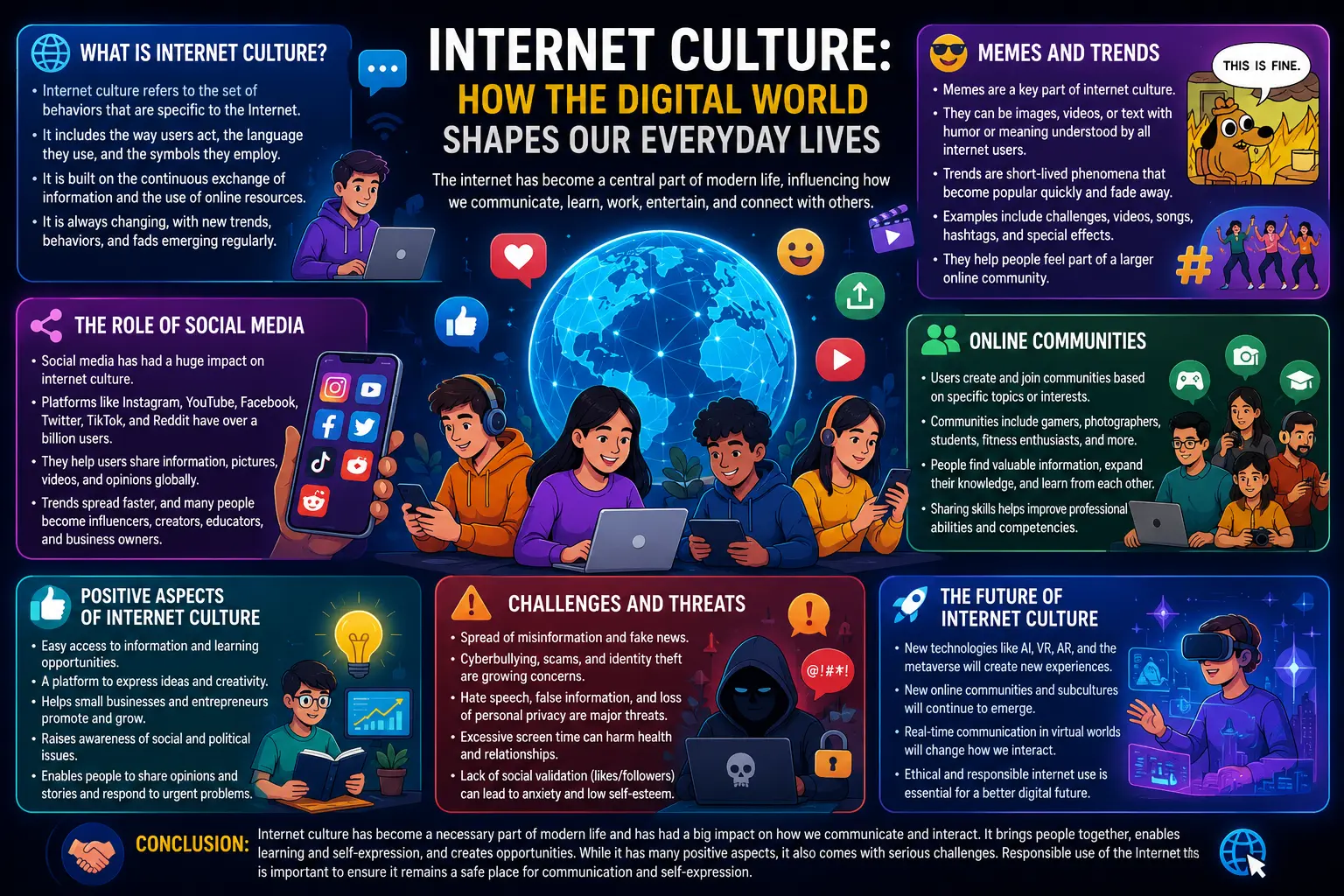
Internet culture refers to the set of behaviors that are specific to the Internet. These behaviors are seen in how Internet users act, the language they use, and the symbols they employ. The foundation of this culture lies in the continuous exchange of information between individuals, along with the active use of various online resources. Internet culture is always changing and growing, which means new trends, behaviors, and fads keep coming up. Moreover, these trends often do not last long, as they are quickly replaced by new ones.
The Role of Social Media
Social media has had a major impact on the development of internet culture. The most popular social media platforms, such as Instagram, YouTube, Facebook, Twitter, TikTok, and Reddit, have over a billion users. These platforms are important in spreading internet culture because they allow users to share information, pictures, videos, and opinions with people around the world. Because of social media, trends develop much faster than before, and millions of people can see the same video or post within a few hours. In addition, social media has given many people a chance to become influencers, content creators, educators, and business owners.
Memes and Trends
Memes are one of the key elements of internet culture. They are the main way that culture and trends spread online. Memes can be images, videos, or text with a specific meaning or humorous content that is understood by all Internet users. Trends on the Internet are short-lived phenomena that become popular among users quickly and then fade away. The most popular trends can be seen in challenges, videos, songs, hashtags, and special effects. Trends help people feel like they are part of a larger Internet community, even when they are only interacting online.
Online Communities
Internet users are creating and joining more online communities that focus on specific topics or interests. These communities have brought together many people who share common interests, such as gamers, photographers, students, and fitness enthusiasts. Moreover, people find valuable information in these communities and expand their knowledge. Internet users also learn from each other and share their skills, which helps them improve their professional abilities and competencies.
Positive Aspects of Internet Culture
Internet culture has many positive aspects, such as easy access to information, learning opportunities, and the ability to express oneself. The Internet also provides small businesses and aspiring entrepreneurs with the chance to promote their products and services and make money. Furthermore, internet culture has positively impacted society by raising awareness of various social and political issues. Internet users can share their opinions and stories with the world, allowing people to respond quickly to urgent problems.
Challenges and Threats
Unfortunately, internet culture also has some negative sides. One of these is the spread of misinformation, which can be hard to tell apart from reliable news. Moreover, internet users are increasingly becoming victims of cyberbullying, scams, and identity theft. A major threat to internet culture is also the spread of hate speech and false information, as well as the loss of personal privacy. Many people spend too much time online, which can negatively affect their health and relationships. Additionally, social media users may experience anxiety and low self-esteem due to the lack of social validation, such as likes or followers.
The Future of Internet Culture
Internet culture will continue to change as new technologies and innovations arise. The growing popularity of artificial intelligence, virtual reality, augmented reality, and the met averse will lead to new online communities and internet subcultures. In the future, Internet users will be able to communicate in real-time within a virtual world, which will significantly change how people interact with each other. However, for internet culture to keep growing and thriving, it is essential to use the Internet ethically and responsibly.
Conclusion
Internet culture has become a necessary part of modern life and has had a big impact on the way people communicate and interact. The Internet has brought people together and enabled them to learn and express themselves. Internet users can join online communities and share their knowledge and skills with others. While internet culture has many positive aspects, such as education and social empowerment, it also presents some serious challenges and threats. Therefore, responsible use of the Internet is important to ensure that it remains a safe place for communication and self-expression.