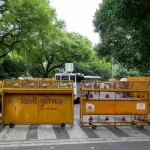





It has been a wild few weeks in Indian politics, and few expected it to unfold this way. The Cockroach Janta Party, yes, you read that right, has called for a peaceful, non-violent procession and protest at Jantar Mantar in New Delhi. They demand the immediate removal and expulsion of Union Education Minister Dharmendra Pradhan. The party claims this is necessary due to a pattern of irregularities, poor administration, and leaks in competitive exams over the past several years. This includes the NEET-UG controversy and also involves issues with CBSE, CUET, and SSC GD examinations. The party is clear: this is their battle against a system that has repeatedly failed India’s youth, and they want real action now, not empty promises. Before diving into the march itself, let’s take a moment to appreciate how strange and captivating the story behind this movement truly is. From a Judicial Remark to a Political Reckoning On May 15, 2026, during a Supreme Court hearing regarding a contempt petition about fraudulent professional credentials, Chief Justice of India Surya Kant made a comment that ignited a firestorm online. He referred to a section of the youth, saying: “There are youngsters like cockroaches, who don’t get any employment or have any place in the profession. Some of them become media, some of them become social media, RTI activists, and other activists, and they start attacking everyone.” Essentially, the country’s top judge compared unemployed youth to cockroaches and parasites. Most expected outrage, a few news cycles, and then silence. Instead, something unexpected happened. The next day, Abhijeet Dipke, a political communications strategist, took to X and announced a “platform for all the cockroaches out there,” with eligibility criteria that were both satirical and painfully relatable: be unemployed, be lazy, be chronically online, and be able to rant professionally. Within days, the movement claimed over 350,000 sign-ups and more than 20 million Instagram followers, reportedly outpacing any other political party in the country on that platform. The name itself, Cockroach Janata Party, is a deliberate jab at the ruling Bharatiya Janata Party. You don’t need to read between the lines to get it. What began as a satirical meme page quickly transformed into a serious political group holding press conferences, naming spokespersons, and preparing for mass mobilization at one of Delhi’s most historically significant protest sites. Who Is Running the Show? On June 2, CJP announced its three spokespersons, and their names are more interesting than they might seem. Saurav Das was named Chief Spokesperson. He is an investigative journalist with a background in legal, judicial, and social issues. Das also played a significant role in the anti-pollution protests at India Gate in November 2025. Vijeta Dahiya, a political researcher, author, and filmmaker who has worked extensively with YouTube content creators, is the second spokesperson. She has written two books and directed Haryanvi films. The third name is Ashutosh Ranka, described as a former management consultant, completing what looks like a deliberately diverse and qualified team. These names may seem new to the casual observer, but there is more to their stories. Upon closer inspection, it’s evident that these individuals have various degrees of prior political involvement. Dipke himself, the founder—or as his supporters affectionately call him, the “Original Cockroach”—volunteered with the Aam Aadmi Party from 2020 to 2023. The connections between CJP’s inner circle and AAP’s orbit are not mere coincidences, and critics have pointed this out. To their credit, CJP has made it clear that they are an independent body and not associated with any political party, at least for now. Whether that independence can withstand pressure is another question entirely. The AAP Mirror — With One Key Difference The comparison is unavoidable. In its growth phase, CJP operates similarly to how AAP built its momentum in its early years. They are mobilizing through digital channels, creating a narrative of outsider credibility, and positioning themselves as the voice of ordinary, struggling citizens. However, a critical distinction matters. AAP primarily ran on an anti-corruption narrative. It was reactive and positioned against something. CJP, in contrast, has worked to establish its identity around a specific group and ideology: the unemployed, the exam-weary, and the digitally-savvy Gen Z who feel let down by institutional India. Their slogan—Voice of the Lazy and Unemployed—is ironic on the surface, but it carries a genuine truth beneath. These young people studied hard, paid exam fees, prepared for years, and then witnessed the system fail them through leaked papers and administrative failures. Whether this clear ideology can lead to lasting influence, or whether it crumbles when the news cycle shifts, is the real question. The Ground Reality: Delhi on High Alert Today is June 6, the day the country, or at least a very watchful segment of it, has been anticipating. Abhijeet Dipke, who had been in the United States, arrived at Indira Gandhi International Airport this morning. He urged supporters not to gather at the airport itself—sensible, given that the party had already asked followers to avoid disrupting passenger movement. Instead, they were directed to Parliament Street Police Station, where the party intended to formally request permission for the demonstration before heading to Jantar Mantar. On the ground, the Delhi Police have been proactive. Over 1,000 personnel have been deployed around central Delhi and specifically at Jantar Mantar. Several layers of barricades have been set up on all main approach routes to the site. Drone units are monitoring crowd density and movement in real time. Senior officers are conducting continuous on-site reviews supported by live social media monitoring. The permission issue had raised concern in the days leading up to today. The party announced a procession without having submitted a formal police request, which sparked legitimate legal issues. Dipke’s plan to personally seek authorization at Parliament Street police station appears to have addressed that, at least procedurally. The Controversies That Follow No notable political figure arrives without some baggage, and Dipke is no different. The founder has faced accusations of expressing support for events some have labeled anti-nationalistic. Dipke has continually defended this as his right to free speech and personal opinion. Legally and constitutionally, that stance has merit, but politically, it is the kind of ammunition opponents will likely use against him, which could undermine his momentum at a crucial time. The party is also not yet registered with the Election Commission of India, meaning that despite its digital presence and street visibility, CJP currently exists in a legal gray area—a movement more than a party, an idea rather than an institution. What It All Means India has a long and complex history with protest movements that begin as spectacles but become substantive—or vice versa. Anna Hazare’s movement gave rise to AAP. Student protests have influenced policies. Jantar Mantar has served as the venue for some of the country’s most significant demonstrations, both remembered and forgotten. The Cockroach Janta Party, regardless of what one thinks of its name, founder, or AAP connections, has done something genuinely challenging: it has taken a judicial insult and transformed it into a rallying cry for millions of young Indians who feel ignored by the institutions meant to support them. Twenty-two million Instagram followers in just under three weeks is not a fluke. It’s a signal. Whether CJP can maintain that momentum and turn it into sustained political influence—whether June 6 at Jantar Mantar marks a milestone or merely a footnote—will become clearer in the hours and weeks ahead. All eyes are on Delhi. The cockroaches are marching. And for once, they’ve made it impossible to look away.