





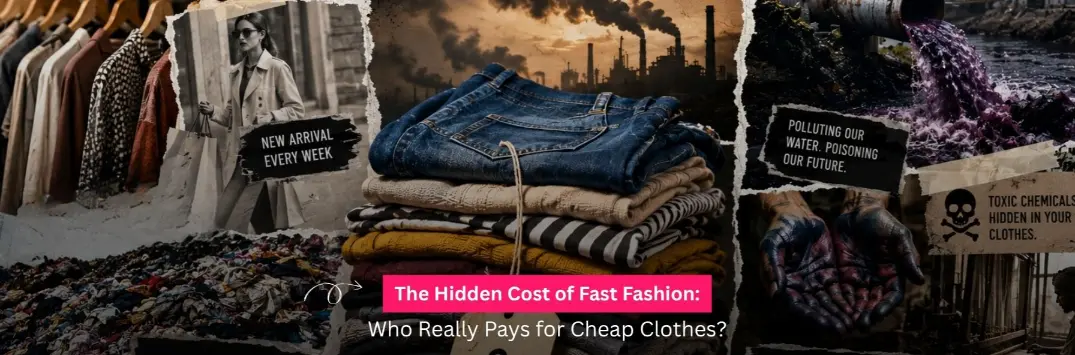
What is fast fashion? Fast fashion is one of the defining issues of the 21st century, with consequences that extend far beyond clothing. Yet before discussing its impacts, it is important to understand what fast fashion actually is. With the rise of platforms such as TikTok and Instagram, consumers are constantly exposed to new trends through influencers and celebrities posting clothing hauls and promoting the latest styles. Fast fashion refers to the rapid production and sale of cheap, low-quality clothing designed to keep up with these ever-changing trends. Companies such as Shein, Urbanic, and H&M have become some of the largest contributors to this increasingly problematic industry.
The business model of fast fashion relies on encouraging consumers to buy more and buy often. To achieve this, companies keep prices extremely low, making clothing seem affordable and disposable. However, these low prices often come at the cost of quality. Clothes wear out quickly, fall apart after a few uses, or simply go out of fashion, prompting consumers to discard them and purchase more. This cycle of constant consumption and disposal has become one of the primary reasons landfills around the world are overflowing with textile waste, much of which is non-biodegradable. The environmental consequences of this waste are immense and affect everyone, regardless of whether they actively participate in fast fashion.
The growth of companies such as Shein demonstrates how profitable this model has become. Shein generated approximately $3.15 billion in revenue in 2019. By 2020, that figure had risen to $9.8 billion, and in 2021 it reached $15.7 billion—an increase of nearly 60 percent in just one year. This growth coincided with the rise of social media culture. During the COVID-19 pandemic, many people increasingly relied on platforms such as Instagram and TikTok for entertainment, social interaction, and even income. Influencers became powerful trendsetters, promoting new styles and encouraging followers to constantly update their wardrobes in order to remain fashionable and relevant.
The environmental impact of this culture is staggering. Every year, approximately 92 million tonnes of textile waste end up in landfills. A significant portion of this waste consists of clothing that is discarded because it is no longer trendy, no longer wanted, or no longer usable due to poor quality. Yet textile waste is only one aspect of the problem. Meeting the enormous demand for clothing, particularly garments made from synthetic fibres, requires vast amounts of energy and resources. According to the United Nations Environment Programme, the fashion industry is responsible for nearly 10 percent of global carbon emissions—more than the aviation and shipping industries combined. It also accounts for almost 20 percent of global wastewater, with textile dyeing consuming around 93 billion cubic metres of water each year. The industry’s environmental footprint is therefore impossible to ignore.
Beyond environmental damage, fast fashion raises serious ethical concerns. Major brands have repeatedly faced accusations of plagiarism, stealing designs from independent artists and smaller creators. Companies such as Shein have also been criticised for exploitative labour practices, including excessively long working hours, inadequate wages, limited leave, and unsafe working conditions. While such practices may not always violate local laws, they remain deeply unethical.
To process the enormous number of styles demanded by consumers, many fast fashion companies rely on extremely cheap labour, sometimes including child labour and working conditions that resemble modern slavery. In order to keep production costs low, manufacturing is often outsourced to developing countries with weaker labour protections and less stringent environmental regulations regarding toxic dyes and unsustainable materials. The result is a system that simultaneously exploits workers, damages the environment, and maximises corporate profit. Although child labour and exploitative working conditions once attracted significant public attention, they are no longer consistently scrutinised by the media, allowing many fast fashion companies to continue operating without meaningful accountability.
Fast fashion is a societal evil. Some may argue that it is a necessary one because it makes clothing affordable and accessible. However, the industry’s costs far outweigh its benefits. Fast fashion thrives on plagiarism, labour exploitation, environmental degradation, and a throwaway culture that encourages people to view clothing as disposable. Trends may appear harmless, and the desire to fit in is a deeply human instinct, but participation in fast fashion only sustains a system that is causing immense harm. Unless consumers, corporations, and governments begin to prioritise sustainability and ethical production, the problem will continue to grow with no meaningful solution in sight.